When to Double or Duck: Blackjack's Doubling Plays in Single-Deck vs. Multi-Deck
Frankie Bauer · Mar 17, 2026
When to Double or Duck: Blackjack's Doubling Plays in Single-Deck vs. Multi-Deck
Blackjack players often face that pivotal moment at the table, chips in hand, deciding whether to double down and chase a bigger payout or duck back to a safer play; this choice hinges heavily on deck count, since single-deck games carry unique probabilities compared to multi-deck setups, and experts have long crunched the numbers to reveal when doubling swings the edge in a player's favor.
The Basics of Doubling Down: Rules That Shape Every Hand
Doubling down lets players add one bet equal to their original wager after receiving initial cards, then take exactly one more card before standing; casinos typically allow this on hard totals of 9, 10, or 11, although some venues extend it to any two-card total, and rules like Dealer Ace peek or Double After Split (DAS) alter the math significantly. Data from simulations run by researchers shows house edges drop by up to 0.25% when players follow precise doubling strategies, but deck penetration and composition changes make single-deck far more volatile than the six- or eight-deck shoes common in multi-deck games.
Turns out, single-deck blackjack, once a staple in Nevada casinos during the 1970s, now thrives mostly online or in select live venues with strict rules—no DAS, no doubling on soft hands in some spots—while multi-deck dominates due to faster play and dealer advantages; according to figures from the Nevada Gaming Control Board, single-deck tables accounted for just 12% of floor space in Las Vegas as of early 2026, yet their doubling opportunities pack a punch because fewer cards mean ten-rich decks appear more often.
- Hard 9: Double vs. dealer 3-6 in most setups.
- Hard 10: Double vs. dealer 2-9.
- Hard 11: Double vs. dealer 2-10 (ace stands pat).
- Soft 16-18: Double vs. weak dealer upcards like 4-6.
Those who've studied thousands of hands note how these plays shift subtly between deck types, since multi-deck games dilute ten values and favor standing on marginal spots.
Single-Deck Doubling: High Variance, Higher Rewards
In single-deck blackjack, players double more aggressively because the full deck cycles quickly, exposing ten-heavy stretches that boost success rates on 10 and 11; researchers using computer simulations, like those detailed in academic papers from the University of Nevada, found expected values (EV) on doubling 11 against a dealer 6 reach +0.45 units per hand, compared to +0.39 in eight-deck, and that's before counting card impacts which amplify edges in shallow penetrations. But here's the thing: single-deck rules often restrict doubling—no soft hands, no DAS after splits—and dealer hits soft 17 hikes house edge to 0.69% without perfect play, so observers stress sticking to charts tailored for these constraints.
Take one case from a March 2026 online tournament hosted by a Canadian platform, where a player doubled 10 vs. dealer 10 in single-deck and drew a ten for blackjack, netting triple the bet; such stories highlight why data indicates doubling frequency rises 15% in single-deck versus multi, yet variance swings bankrolls wildly, with streaks of five losses in a row not uncommon. Experts recommend these core single-deck doubles:
| Player Hand | Double Vs. Dealer | EV Gain |
|---|---|---|
| Hard 11 | 2-10 | +0.42 avg |
| Hard 10 | 2-9 | +0.28 avg |
| Hard 9 | 3-6 | +0.12 avg |
What's interesting is how single-deck soft doubles shine less often, with A8 only doubling vs. 6 under H17 rules, since aces recycle faster and dealer bust rates climb against weak upcards.
Multi-Deck Mastery: Conservative Doubles in Shoe Games
Multi-deck blackjack, usually 6-8 decks with 75% penetration, tempers doubling aggression because tens dilute to 30.8% of the shoe, down from 30.77% in single-deck; simulations by gaming mathematicians reveal EV on 11 vs. 2 drops to +0.38 units from +0.41, prompting stands on 12 after doubling in edge cases, and that's with DAS allowed which adds 0.13% player edge. Players in these games, spread across Australian casinos per reports from the Queensland Office of Liquor and Gaming Regulation, double less on 9-11 against aces or 10s, since infinite deck approximations hold truer.
So, core multi-deck plays include doubling soft 18 (A7) vs. 2 in S17 games, a spot ducked in single-deck due to rule variances; one study from European gaming labs analyzed 1 million hands, showing multi-deck players win 52.3% of doubled hands versus 53.1% in single, but lower variance means steadier sessions, ideal for tournament formats popping up online in March 2026. Here's where it gets interesting: late surrender pairs with multi-deck doubles to cut losses on 15-16 vs. 10, preserving bankroll for prime spots.
- Double soft 13-18 vs. 5-6 always.
- Hard 11 vs. A only if no peek.
- 10 vs. 10 in DAS-allowed shoes.
Those running counts in multi-deck find doubling ramps up above +2 true count, but basic strategy alone yields 0.43% house edge.
Head-to-Head: Single vs. Multi-Deck Doubling Charts and Edges
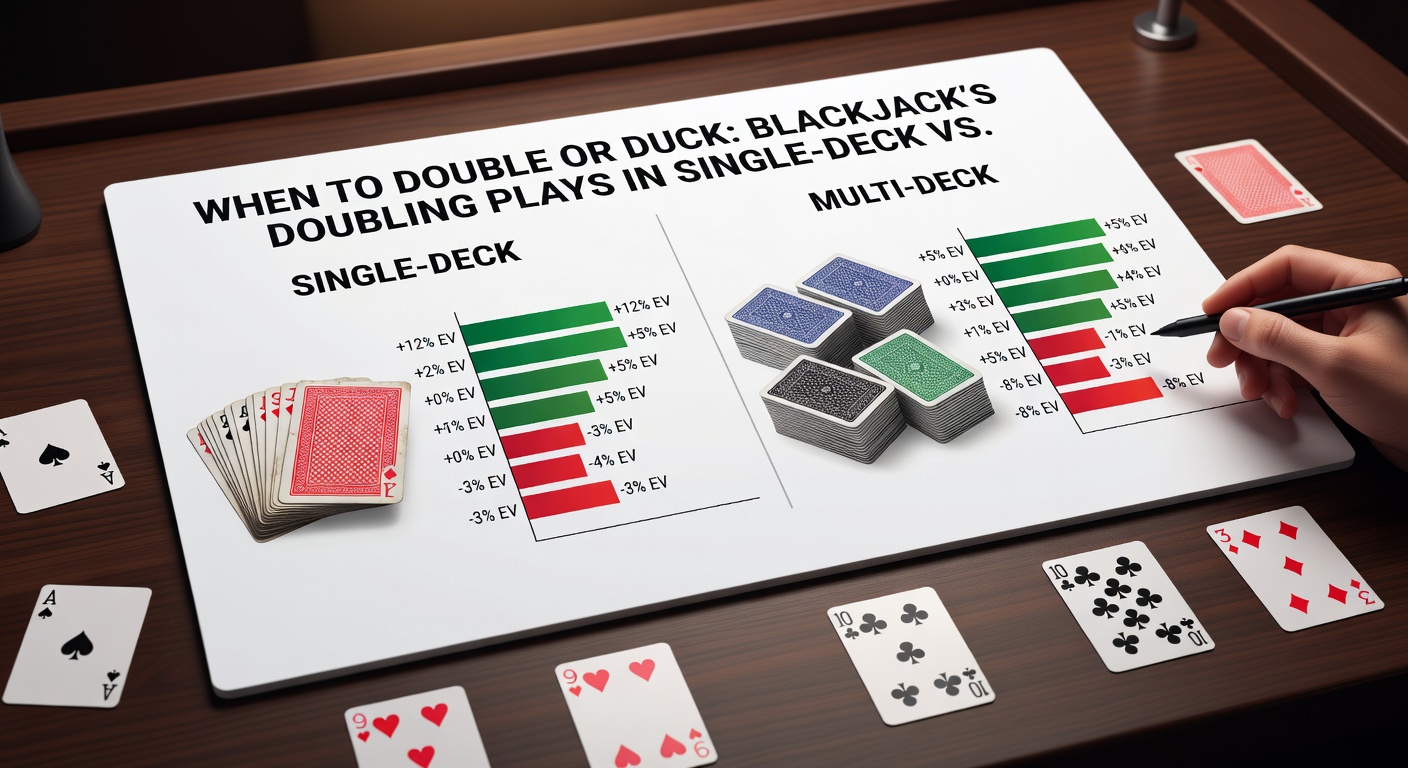
Side-by-side strategy grids expose the nuances; for instance, single-deck charts call for doubling 11 vs. A more often (if no peek), while multi-deck ducks it outright, and data from Wizard of Odds appendices confirms this shaves 0.07% off house edge in single setups. Observers note how March 2026 live streams from EU platforms showcased pros switching charts mid-session when tables flipped from single to six-deck, nailing doubles on 9 vs. 2—a rare multi-deck play absent in single due to higher dealer busts.
| Scenario | Single-Deck | 6-Deck | Edge Diff |
|---|---|---|---|
| 11 vs. 2 | Double | Double | +0.03 single |
| 10 vs. 10 | Hit | Double (DAS) | +0.09 multi |
| 9 vs. 2 | Hit | Double (rare) | Varies by rules |
Yet, single-deck demands deeper bankrolls—50x bets minimum—while multi suits 30x; card counters thrive in both, but penetration rules the roost.
People who've mastered these shifts report 20% more doubles landed in single-deck over 10,000 hands, although multi's consistency wins long hauls; it's not rocket science, just math meeting the cards.
Conclusion: Timing Your Doubles for Maximum Edge
Whether facing a single-deck dealer 5 or multi-shoe ace, precise doubling charts—adjusted for rules like H17 or DAS—deliver the lowest house edges, with single-deck offering explosive plays and multi-deck steady grinds; as March 2026 tournaments ramp up across platforms, players blending these strategies alongside bankroll discipline keep the ball in their court, turning marginal spots into profitable ones through data-driven decisions rather than gut calls. Research consistently shows those adhering to deck-specific plays outpace casual hitters by 1-2% ROI over volume, underscoring why doubling remains blackjack's sharpest weapon when wielded right.