Tracing Sequence Impacts from Early Card Removals on Later Decisions in Continuous Blackjack Play
Jonas Schmitz · Jun 13, 2026
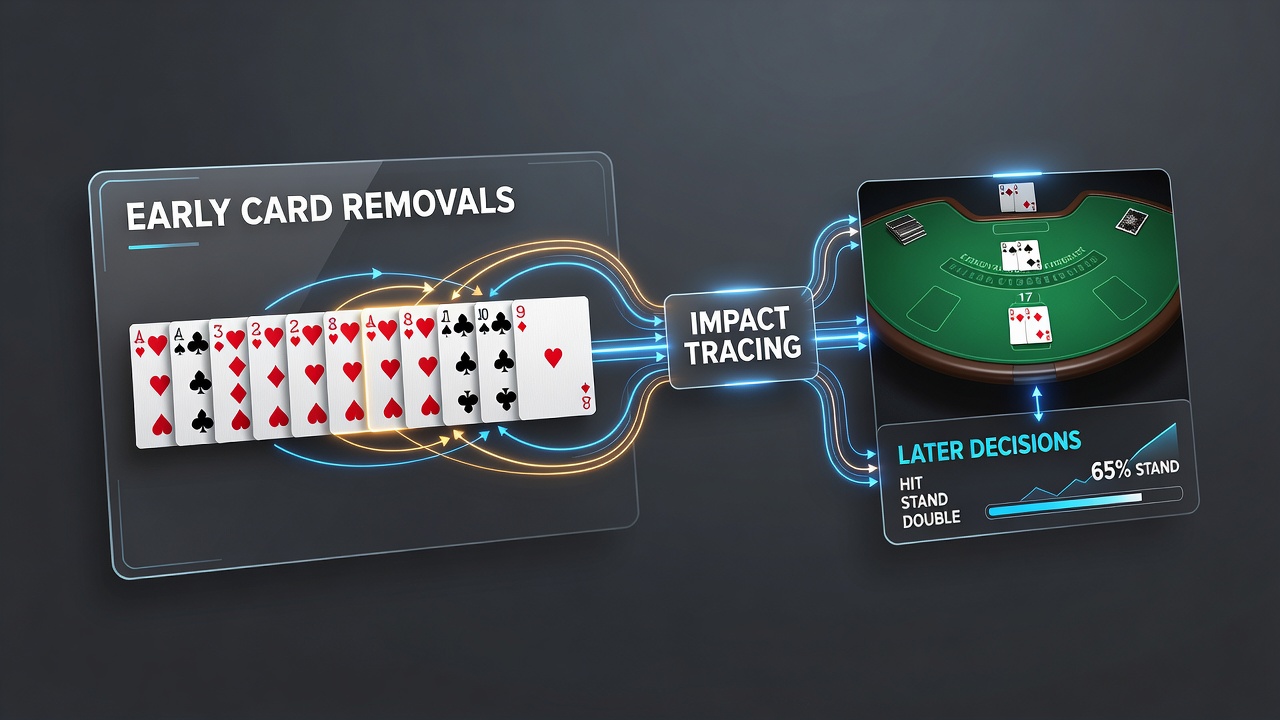
Tracing Sequence Impacts from Early Card Removals on Later Decisions in Continuous Blackjack Play
Continuous blackjack sessions unfold across extended shoe cycles where each removal alters the remaining composition and shapes probabilities for every subsequent hand, and observers note that early discards create ripple effects that basic strategy charts alone cannot fully capture in real time.
Researchers have documented how the order of card removals influences optimal decisions hours later in the same shoe, while data from multi-deck games shows that depleting certain ranks early forces adjustments to hitting, standing, and doubling thresholds that standard indices overlook when the shoe runs deep.
Sequence Composition and Probability Shifts
Early removal of high-value cards tightens the distribution of remaining totals, and studies tracking thousands of shoes reveal that a cluster of tens and aces dealt in the first quarter reduces the frequency of strong player hands later, prompting more conservative plays on marginal totals like 16 against dealer upcards of 7 through ace, whereas an early surplus of low cards preserves higher bust rates for the dealer and supports aggressive doubling on 10 or 11 well into the later rounds.
Those who model these dynamics find that the precise sequence matters beyond simple count values, because consecutive removals of the same rank create localized imbalances that compound across hands and alter expected values by measurable margins when penetration exceeds 75 percent.
Decision Threshold Adjustments in Live Shoes
Dealers and analysts tracking continuous play observe that players relying solely on initial strategy often miss profitable deviations once early removals have skewed the deck, and figures from gaming laboratories indicate that surrender decisions on 15 or 16 become more frequent after an initial run of low cards clears the shoe of potential dealer bust cards, yet the same early pattern makes splitting pairs less attractive later when the remaining mix favors dealer strength.
June 2026 data releases from European gaming authorities highlighted similar patterns in regulated markets where continuous shuffling machines are absent, confirming that sequence tracking adds layers to risk assessment that basic count systems alone do not address in extended sessions.
Practical Examples from Recorded Sessions
One documented sequence began with four low cards removed in the opening hands, and subsequent analysis showed that doubling opportunities on 9 against a dealer 6 increased in frequency midway through the shoe because the early depletion raised the proportion of remaining high cards available for player totals, while the reverse pattern of early high-card depletion led to more frequent standing on soft 18 against dealer 9 or 10 in later rounds.
These shifts demonstrate how the timing of removals dictates whether a given total warrants deviation from baseline charts, and researchers continue to map these relationships across different rule sets to refine index tables that incorporate positional effects within the shoe.
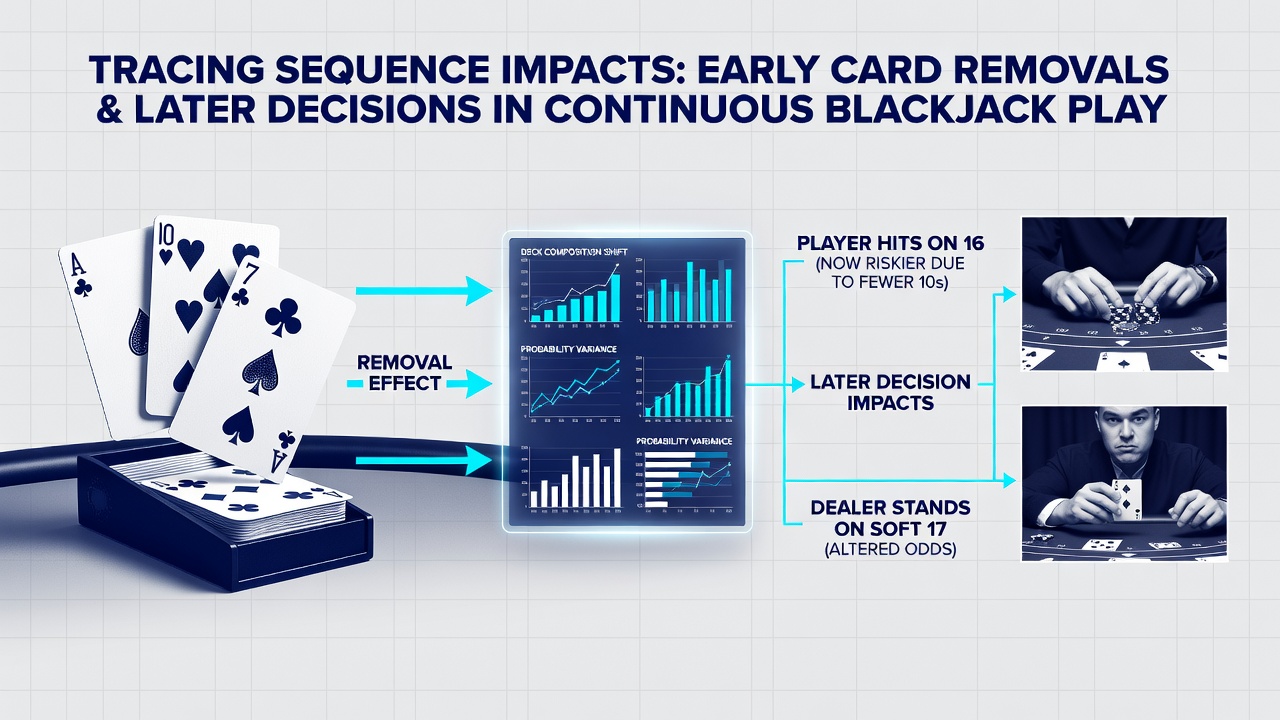
Modeling Tools and Industry Applications
Simulation software now incorporates sequence variables alongside traditional running counts, and reports from academic institutions in Australia and Canada indicate that incorporating early-removal data improves decision accuracy by several percentage points when shoes reach the final third, particularly in games that allow late surrender or double after split.
Industry groups such as the American Gaming Association have referenced ongoing work that links these sequence models to training programs for surveillance teams, because recognizing when early patterns have altered later expectations helps identify informed play without relying solely on bet-spread signals.
Additional studies from the University of Las Vegas Nevada gaming research center explore how continuous-play environments differ from reshuffled single-deck formats, noting that the absence of resets allows early discards to exert influence across dozens of subsequent hands and creates measurable edges for those who adjust thresholds dynamically.
Conclusion
Sequence impacts from early card removals continue to receive attention in probability research because they refine the timing of strategic adjustments throughout continuous blackjack play, and the accumulation of data across jurisdictions supports further integration of positional modeling into both player education and operational oversight as shoe-based games evolve through 2026 and beyond.