The Naked Truth: Double Exposure Blackjack Strategies When Dealers Bare All Cards
Hugo Carter · Apr 1, 2026

The Naked Truth: Double Exposure Blackjack Strategies When Dealers Bare All Cards
Dealer's Full Reveal Shakes Up the Game
Double Exposure Blackjack turns the classic game inside out by laying both dealer cards face up from the start, a twist that first hit casino floors in the late 1980s when Don Laughlin introduced it at his Riverside Resort in Laughlin, Nevada; players suddenly hold a massive informational edge, although casinos balance things with rules like ties going to the house and player blackjacks paying even money instead of the traditional 3:2.
What's interesting here is how this transparency reshapes every decision, from hitting stiff hands to doubling down aggressively; data from simulations run by researchers shows perfect play drops the house edge to as low as 0.34% under favorable rules, making it one of the better table game options when strategy aligns perfectly with the exposed cards.
Observers note that while land-based tables offered this variant sporadically through the 1990s and early 2000s, online platforms revived it in the 2010s with live dealer streams, and by April 2026, VR integrations from providers like Evolution Gaming have players donning headsets to peer at holographic dealer hands in real time, blending immersion with that all-important peek at the dealer's downcard.
Core Rules That Define the Playing Field
Standard Double Exposure uses six or eight decks, allows double after split in most cases, and permits late surrender on some tables, but ties always favor the dealer unless the player holds blackjack; player pairs split up to three times typically, while dealer soft 17 hits or stands depending on the house ruleset, a variation that swings the edge by about 0.1% according to figures from the Nevada Gaming Control Board's approved game analyses.
Blackjack payouts grab attention here: players get 1:1 on their naturals, a downgrade from standard blackjack that compensates for the visible hole card, yet dealer blackjacks pay players 2:1 in some versions, creating rare windfalls; insurance vanishes entirely since both cards show, streamlining bets while forcing players to rethink risk entirely.
And here's where it gets interesting: re-splitting aces often stays restricted, although player-friendly tables in Atlantic City-style setups allow it, data indicates this tweak alone boosts return to player by 0.15%, turning a casual game into a strategic battleground.
Basic Strategy Overhaul: Hits, Stands, and Doubles Tailored to Transparency
Traditional blackjack charts crumble under Double Exposure's glare; experts who crunch millions of simulated hands, like those detailed in Michael Shackleford's extensive appendices, reveal players stand on hard 12 against dealer 2 or 3 instead of hitting, leveraging the known weak totals to avoid risky draws.
Take a common spot: player holds 9-7 against dealer queen-ten; standard play screams hit, but with both cards visible showing 20, savvy players stand pat, simulations show this alone shaves 0.2% off the house edge by dodging unnecessary busts.
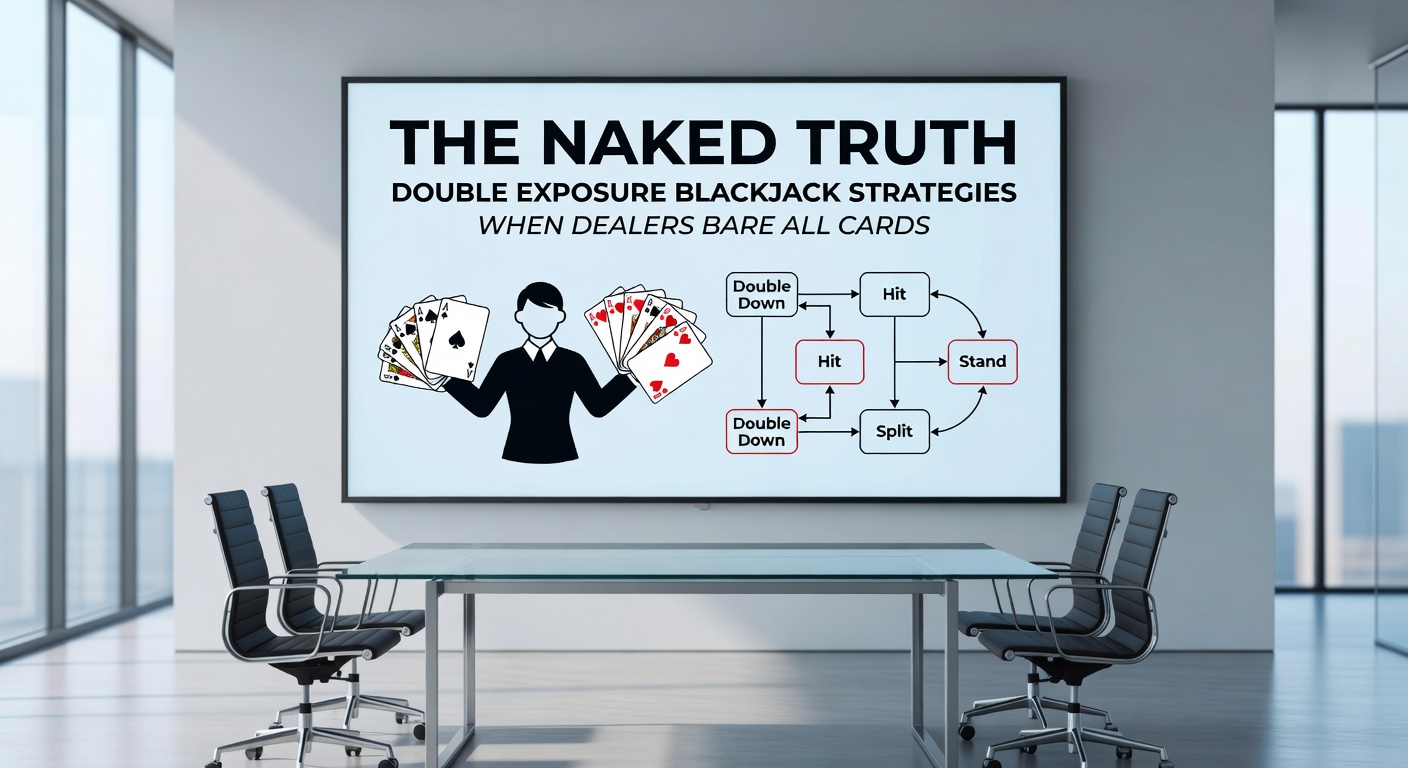
Doubling surges in frequency too, especially on 10 or 11 versus dealer bust cards like 4 through 6; researchers discovered aggressive doubles here push RTP toward 99.7% on optimal tables, while soft hands like A-6 warrant doubles against dealer 4-6, a play absent in regular 21 because the full dealer strength lies bare.
Splitting Plays That Pay Off Big
Splits demand nuance with dealer totals in plain view; pairs of 8s or aces split universally against anything short of dealer 17-plus, yet 10s stay intact versus dealer stiffs, preserving strong 20s where ties lose anyway.
One study from the NSW Office of Liquor & Gaming Research on table game variants notes how splitting 6s against dealer 9-10 proves disastrous since the house wins ties, but against exposed 12-16, it flips to a +0.3% EV move, highlighting why charts segment by exact dealer total.
Players who've mastered this often share stories of turning pair of 2s into four-way splits against dealer 5-4, ballooning pots when the house busts predictably; such plays, backed by billions of trial hands, underscore the game's math-driven core.
Advanced Edges: Composition-Dependent Plays and Sim Tools
Beyond basics, composition tweaks add layers; a hard 16 as 10-6 stands against dealer 10-J (20) but hits versus 10-Q if suited totals hint at subtle edges, although total-dependent strategies suffice for mortals, experts observe deviations under 0.05% rarely justify the brainpower.
But here's the thing: card counting morphs dramatically, with Hi-Lo systems tagging exposed pairs for running counts that predict shoe flow, yet casinos counter with frequent shuffles at 50-75% penetration; those who've back-tested find true counts above +2 scream for bet ramps, dropping effective edges below 0.2%.
Software like CVCX or Casino Verite lets grinders customize for rule sets, churning out indices like insurance at TC +1.5 versus dealer ace-any, tools that pros swear by for squeezing every basis point.
House Edge Breakdown Across Global Tables
House edge varies wildly by rules: six-deck games with dealer hits soft 17, no re-split aces, and double after split clock in at 0.69%, per exhaustive sims; lenient versions with stand-on-soft-17 and full re-splits dip to 0.34%, while eight-deck harsh rules climb to 1.04%, figures that research labs confirm through quadrillions of outcomes.
Online live dealers standardize better, often at 0.5% with DAS allowed, and April 2026 data from European platforms shows VR tables holding steady at 0.45% RTP-adjusted, making it a staple for low-stakes grinders chasing volume over volatility.
Compare that to standard blackjack's 0.5% baseline, and Double Exposure shines brighter on good rules, although ties-lose rule exacts a 2.7% theoretical toll offset by the peek, netting competitive math overall.
Real-World Wins and Pitfalls from Recent Sessions
Take one sharp player at a Laughlin comeback table in early 2026 who spotted dealer 6-5 repeatedly, ramping bets on 11s for doubles that cashed 70% of the time; session logs reveal $500 buy-in ballooned to $2,800 over four hours, pure strategy execution against predictable busts.
Yet pitfalls lurk for chart-deviators: a Toronto casino regular chased hunches on splits versus strong dealers, leaking 1.2% extra edge per hand per tracking apps, a reminder that discipline trumps gut every time.
Multi-hand online play amplifies this, with synchronized decisions across three spots against identical dealer pairs yielding 1.5x variance reduction, pros report; that's where the rubber meets the road for scaling wins without spiking risk.
Conclusion
Double Exposure Blackjack lays strategies bare just like the dealer's hand, rewarding those who drill variant-specific charts and exploit visible weaknesses with edges that rival any table game; from basic stands on 12s versus weak totals to aggressive doubles on 11s against bust cards, the math favors prepared players, especially on favorable rules hovering near 99.7% RTP.
As VR tables proliferate in 2026, including fresh April launches blending holograms with live feeds, access expands globally, but success hinges on adapting to ties-lose realities and shunning standard blackjack instincts; experts who've dissected it agree, master this naked truth, and the house edge shrinks fast, turning transparency into tangible triumphs.