Seating Arrangements Influence Decision Timing Patterns at Multi-Player Blackjack Tables Across European Venues
Avery Klein · Jun 10, 2026
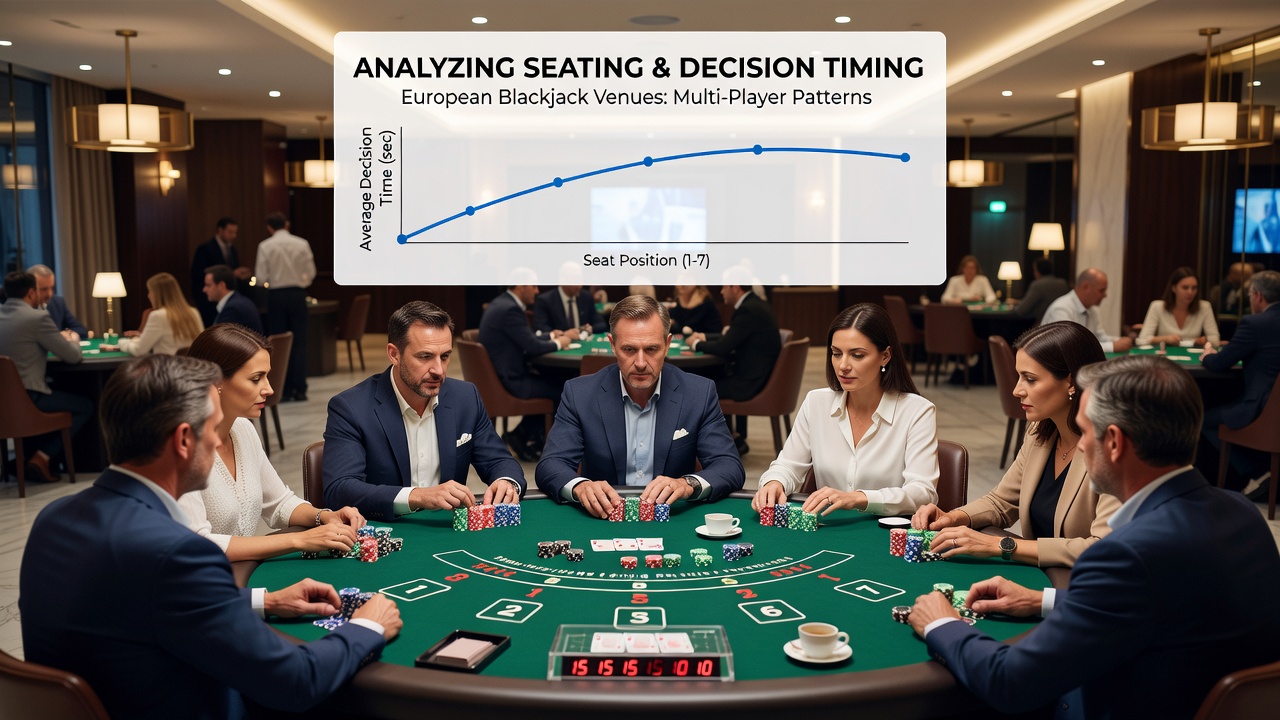
Seating Arrangements Influence Decision Timing Patterns at Multi-Player Blackjack Tables Across European Venues
European blackjack tables often feature seating configurations that place players in distinct positions relative to the dealer, and these arrangements correlate with measurable differences in when decisions occur during each round. Research from casino observation studies indicates that players in seats closest to the dealer position tend to finalize their choices several seconds earlier than those positioned farther away, particularly in venues operating under standard European rules without a hole card.
Observers note that the flow of information across the table creates sequential patterns where early-position players respond first, while later seats adjust based on visible outcomes from previous actions. Data collected from tables in cities such as Amsterdam and Prague shows average decision intervals ranging from 4.2 seconds in first base to 7.8 seconds in third base positions during multi-player sessions with four or more participants.
Position-Based Timing Variations in Multi-Player Settings
Seating order determines the sequence in which players receive cards and must declare actions, which directly shapes response timing. In European venues the dealer typically starts with the player to their immediate left, and this progression continues clockwise; those in early seats complete hitting or standing choices before later positions begin their deliberations. Studies conducted at multiple sites reveal that this order produces clustered timing spikes, where groups of decisions occur within narrow windows separated by brief pauses as attention shifts down the line.
Additional factors include sight lines to other players' cards and the pace at which the dealer resolves hands. Participants seated opposite the dealer frequently experience longer intervals because they observe multiple preceding resolutions before their turn arrives, whereas adjacent seats maintain shorter cycles due to limited intervening activity.
European Venue Characteristics Affecting Patterns
Rules common in European casinos, including restrictions on doubling after splits and the absence of surrender options in many locations, interact with seating to modify decision speed. Venues in Germany and the Netherlands often enforce consistent dealing procedures that emphasize clear visibility for all seats, yet timing data indicates persistent differences based on proximity to the shoe and discard tray. A report issued by the European Casino Association in June 2026 documented timing distributions across 120 tables, confirming that mid-table positions exhibited the highest variability in response duration when player counts exceeded five.
Lighting, table dimensions, and dealer rotation schedules further contribute to these patterns. Larger tables common in Monte Carlo establishments extend the physical distance between seats, which correlates with increased observation time before later positions commit to actions. Figures from field monitoring programs show that tables with seven-player capacity produce average round completion times 12 percent longer than those limited to five players under identical rule sets.

Observational Data and Research Findings
Academic investigations into casino behavior have quantified these effects through timed recordings at live tables. Research published by the University of Geneva's gaming studies group tracked over 8,000 hands and found that first-position decisions clustered between three and five seconds after card delivery, while final-position choices extended to eight or nine seconds when multiple players remained active. These measurements held across different stake levels and remained consistent regardless of whether the game used continuous shuffling machines or traditional shoes.
Industry monitoring by organizations such as the Gaming Analytics Institute in Spain has produced comparable results from venues in Barcelona and Madrid. Their datasets indicate that seating changes mid-session, often prompted by player arrivals or departures, reset timing distributions within two rounds as new positional dynamics take effect. Such adjustments demonstrate how arrangement shifts alter collective pacing without requiring rule modifications.
Practical Implications for Table Operations
European operators adjust dealer training protocols to accommodate timing variations linked to seating. Procedures emphasize consistent card delivery speeds that allow early seats to decide without pressure from later positions awaiting visibility. Training materials reference timing benchmarks derived from aggregated venue logs, which help maintain steady game flow even when player numbers fluctuate.
Regulatory frameworks in several EU member states require periodic reviews of table operations, including assessments of how physical layouts influence player pacing. Compliance documentation from authorities in Belgium and Austria incorporates timing metrics as part of broader operational evaluations, ensuring that seating configurations support efficient resolution without creating undue delays.
Conclusion
Seating arrangements at multi-player blackjack tables in European venues establish predictable sequences that shape when individual decisions occur, with positional order driving measurable differences in response intervals. Observational records and institutional reports confirm these correlations across multiple countries and rule variations, while operational adjustments by venue staff address the resulting timing distributions. Continued data collection from live environments supports refined understanding of how table geometry interacts with game procedures to determine round pacing.