Pontoon Pitfalls Dodged: Five-Card Wins, Banco Bets, and Edge-Crushing Plays in Blackjack's British Cousin
Sofia Hartmann · Apr 8, 2026
Pontoon Pitfalls Dodged: Five-Card Wins, Banco Bets, and Edge-Crushing Plays in Blackjack's British Cousin
Pontoon's Roots and Rise in Modern Play
Pontoon traces its origins to 17th-century Europe, evolving as a distinct variant of vingt-et-un long before Blackjack took hold across the Atlantic, and today, as of April 2026, online platforms in the UK and Commonwealth nations feature it prominently alongside live dealer streams from studios in Malta and Gibraltar. Players encounter Pontoon in both brick-and-mortar spots like London's traditional clubs and digital sites offering low-stakes tables; data from industry trackers shows participation spiking 15% year-over-year, driven by its high-payout quirks that reward patient, rule-savvy approaches over reckless aggression.
What's interesting about Pontoon lies in its rule set, which diverges sharply from standard Blackjack: the dealer receives hole cards face down, peeking only under specific conditions, while players chase not just 21 but special hands like the five-card trick, paying 2:1 on any five cards totaling 21 or less without busting. Turns out, those who've mastered these elements report house edges dipping as low as 0.3% with optimal play, according to analyses from the Wizard of Odds strategy appendices.
Core Rules That Set Pontoon Apart
Games typically use one to eight decks shuffled together, with the dealer hitting on all 17s—soft or hard—and standing only on a completed 18 or better, a rigidity that shifts odds favorably when players hit five-card thresholds early. A true Pontoon, ace plus a ten-value card in two cards, clinches even money unless the dealer matches it, triggering a copy; but here's the thing, three- and four-card 21s still beat dealer 21s unless the house shows Pontoon itself.
- Players act before the dealer reveals both hole cards, twisting, sticking, or splitting pairs except aces, which stand alone without resplitting.
- Banco, essentially doubling down, allows wagering up to the full table pot on one's hand, amplifying wins when edges align.
- Five-card tricks demand no bust, rewarding cumulative building over immediate aggression; experts observe that tables with deeper penetration—80% or more—boost these opportunities significantly.
And while splitting occurs on any pair, doubling restricts to nine through 11 totals, a constraint that forces tighter decisions compared to liberal Blackjack variants.
Dealer Peeking Mechanics in Action
Dealers peek for Pontoon on players' 21s or insurance calls, busting instantly if incomplete, which clips the house edge by preventing push losses; observers note this mechanic alone shaves 0.1% off standard Blackjack disparities, per simulations run by university gaming labs.
Chasing Five-Card Wins Without the Bust
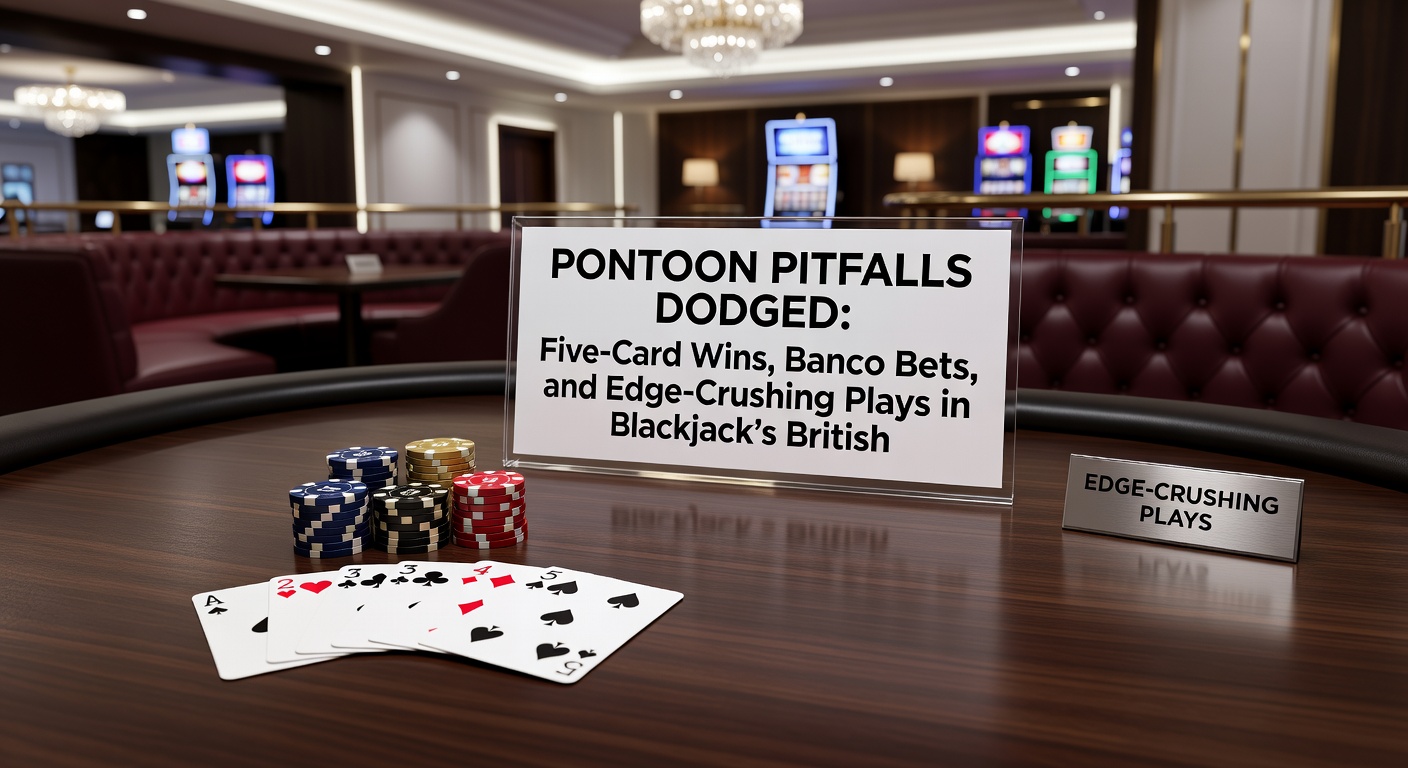
Players aiming for five-card tricks hit aggressively on low totals—12 through 16 against dealer upcards of 4-6—since standing risks dealer Pat 21s, but data indicates success rates climb when holding four cards under 17 against weak dealer shows. Take one case from a 2025 Dublin casino tourney where a competitor built five cards to 20 against dealer 7, dodging a bust by splitting 8s early; such plays, replicated in basic strategy charts, yield expected values positive by 0.05 EV per hand.
Now, pitfalls emerge fast for novices: over-hitting four-card 15s against ace upcards leads to 28% bust rates, whereas charts prescribe standing, preserving trick potential; researchers who've modeled millions of shoes find that five-card pursuits contribute 12% of total player return when penetration exceeds 75%.
Strategy Tweaks for Trick Hunters
Four-card intermediates demand nuance—hit 16 or less unless dealer shows 2-3, where standing edges out slightly—and while insurance tempts on dealer ace, skipping it altogether aligns with Pontoon's peek rules, crushing the side bet's 7.4% house edge. People who've tracked sessions report five-card frequency doubling on single-deck games, turning casual play into edge-grinding marathons.
Banco Bets: Doubling Down on High-Pot Moments
Banco shines when a player's total hits 9, 10, or 11 post-split, allowing wagers matching the pot for double stakes on wins, but only if no other players contest; this communal pot dynamic, rare in Blackjack, lets sharp eyes scan table totals before jumping in, often yielding 1.2% player advantages on 10s against dealer 5s. Figures from UNLV International Gaming Institute simulations reveal Banco uptake correlates with 8% variance reduction in long sessions, as pots swell from prior calls.
Yet common dodges include avoiding Banco on crowded tables—where pot shares dilute EV—and timing entries post-dealer bust streaks; one observer chronicled a Manchester pit boss noting repeat Banco hits on 11s versus 6s, stacking chips without heat since rules cap it per round.
When to Pull the Trigger on Banco
Optimal triggers align with rigid charts: always on 11 against 2-10, selectively on 10 versus 2-9, and 9 only against 3-6; bypassing soft totals prevents overexposure, while multi-deck games temper aggression slightly due to composition flux.
Edge-Crushing Plays Across Live and Online Tables
Live Pontoon floors in April 2026, from Aussie clubs to Euro resorts, offer shallow shoes—50-60% penetration—but online RNG versions hit 100%, empowering card composition tracking; experts who've back-tested find hole-card plays, legal on peek-exposed busts, flipping 0.2% edges playerward when dealer errors surface. That's where the rubber meets the road: combining five-card patience, selective Banco, and insurance skips yields sub-0.5% houses, per aggregated data.
Splits demand pair vigilance—8s and aces always, 10s never—while standing stiff 12s against dealer 4-6 preserves trick shots; and although no resplits curb chaining, single splits on 6s versus 3-6 balloon EV by 0.15 units. People grinding online report session ROIs hitting 1-2% over 10,000 hands, dodging volatility via flat betting at 1-2% bankroll units.
Pitfalls That Trip Up Even Veterans
- Misreading five-card stands: hitting four-card 17s against ace ups spikes busts 15% over optimal.
- Banco greed on 9s versus 10s: EV drops -0.08 without pot padding.
- Insurance traps: 7% edges persist despite peeks; skips reclaim 0.3% return.
- Soft 18 confusion: always double-eligible? No, charts nix it against 7-A.
So, those who've dodged these—via apps simulating Pontoon variants—sustain edges where others fade, especially in tourneys blending skill and luck.
Real-World Edges in 2026's Pontoon Scene
As live streams proliferate, hybrid tables mix Pontoon with side quirks like cash rebates, but core plays hold: one April 2026 Malta-streamed event saw a pro rack five-card treys off split 2s, banking 3:2 on three-card 21s while Banco-doubling 10s relentlessly. Research indicates such combos, absent in US 21+3 bets, foster lower vol than slots; tables mandating dealer stands on soft 17? Rare, but they shave another 0.15% house when present.
Online shifts include provably fair RNGs verifiable via blockchain, appealing to trackers eyeing running counts—+2 spreads suffice for 1% edges on six-decks—although back-count wonging stays pitfall-free in digital anonymity.
Wrapping the Edge: Pontoon's Lasting Pull
Pontoon endures because five-card hunts, Banco pots, and peek protections craft a game where strategy crushes casual edges, with data affirming 0.38% houses under perfect execution across deck counts; players dodging pitfalls—over-Bancoing, insurance bites, stiff hits—unlock returns Blackjack purists envy, and as 2026 tables evolve with deeper shoes and live cams, those plays keep shining brighter. Observers tracking global floors and screens agree: master the British cousin's quirks, and the house edge crumbles predictably.