Poker Meets 21: Unpacking the 21+3 Side Bet's Payout Potential and House Edge
Jonas Schmitz · Mar 22, 2026
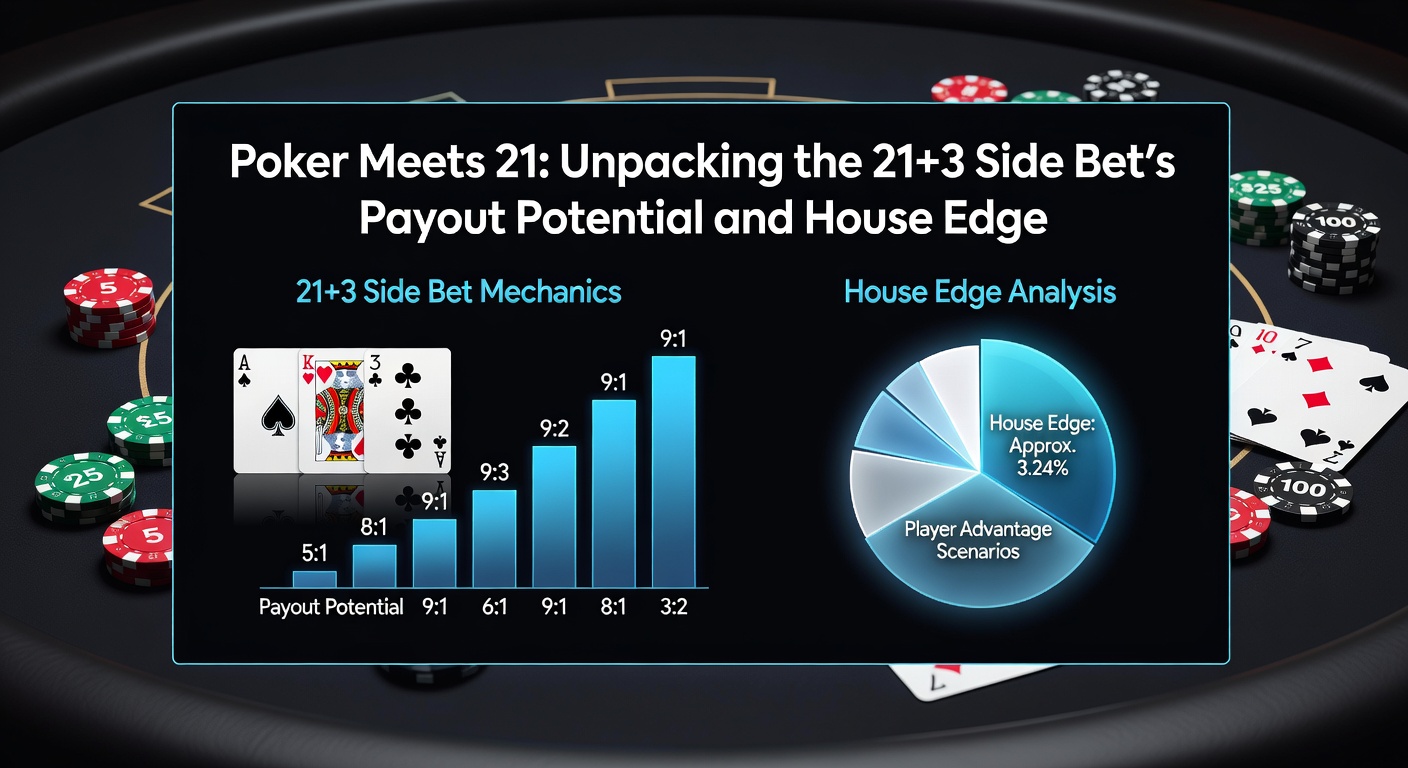
Poker Meets 21: Unpacking the 21+3 Side Bet's Payout Potential and House Edge
Blending Blackjack and Poker: The Basics of 21+3
Players at blackjack tables often spot that extra betting circle labeled 21+3, a side wager that pulls in poker fans by using the player's initial two cards alongside the dealer's upcard to form a three-card poker hand; wins trigger based on standard poker rankings like flush, straight, or three of a kind, while suited combinations ramp up the payouts significantly. Casinos introduced this bet in the late 1990s as a way to spice up standard 21 play, and it quickly spread across Las Vegas floors and online platforms because it adds a layer of excitement without altering the core blackjack rules. Data from industry trackers shows 21+3 appears in about 40% of live dealer games today, especially in multi-deck shoes where the three cards draw from a larger pool, subtly influencing probabilities.
Here's how it unfolds: before the deal, players drop chips on the 21+3 spot; once cards hit the table, those three specific ones get evaluated instantly against the paytable—no waiting for the full hand resolution. A flush pays 5-to-1 in most setups, straights fetch 10-to-1, and rarer hands like straight flushes soar to 100-to-1 or higher, turning small side bets into quick windfalls when luck aligns. Observers note that this setup appeals to poker enthusiasts dipping into blackjack, since it mirrors Texas Hold'em's community card vibe but condenses it to three cards for faster action.
Decoding Payout Tables: What Wins Pay Where
Paytables vary by casino and region, yet common structures dominate; take the standard one where three of a kind returns 30-to-1, full house 35-to-1 (though rarer in three cards), flush 5-to-1, straight 10-to-1, and straight flush 100-to-1—these figures, as calculated by independent analysts, yield a house edge around 3.24% under infinite deck assumptions. But here's the thing: some venues tweak for better player odds, offering three of a kind at 33-to-1 or straight flushes at 120-to-1, which drops the edge to 2.65%; others stingier versions cap at 90-to-1 for the top hand, pushing the edge past 4%.
In Europe, floors like those in Malta often stick to player-friendly charts because regulators emphasize transparency; figures from the Malta Gaming Authority's oversight reports highlight how such variations impact overall table hold percentages. Online, software providers like Evolution Gaming standardize payouts across jurisdictions, but live streams from March 2026 studios reveal temporary promos boosting straight flush to 150-to-1 during peak hours, a nod to rising player demand amid post-winter casino surges. Players who've scanned multiple tables discover that eight-deck games host the most 21+3 spots, since the math holds steady regardless of shoe depth.
- Flush: Typically 5:1, occurring about 1 in 13.9 deals.
- Straight: 10:1, roughly 1 in 45 hands.
- Three of a Kind: 30-33:1, hitting 1 in 117 times.
- Straight Flush: 100-150:1, a 1 in 4,400 shot.
Those numbers stack up from combinatorial math, where suited flushes edge out unsuited straights in frequency, yet the payout balance keeps the house in control.
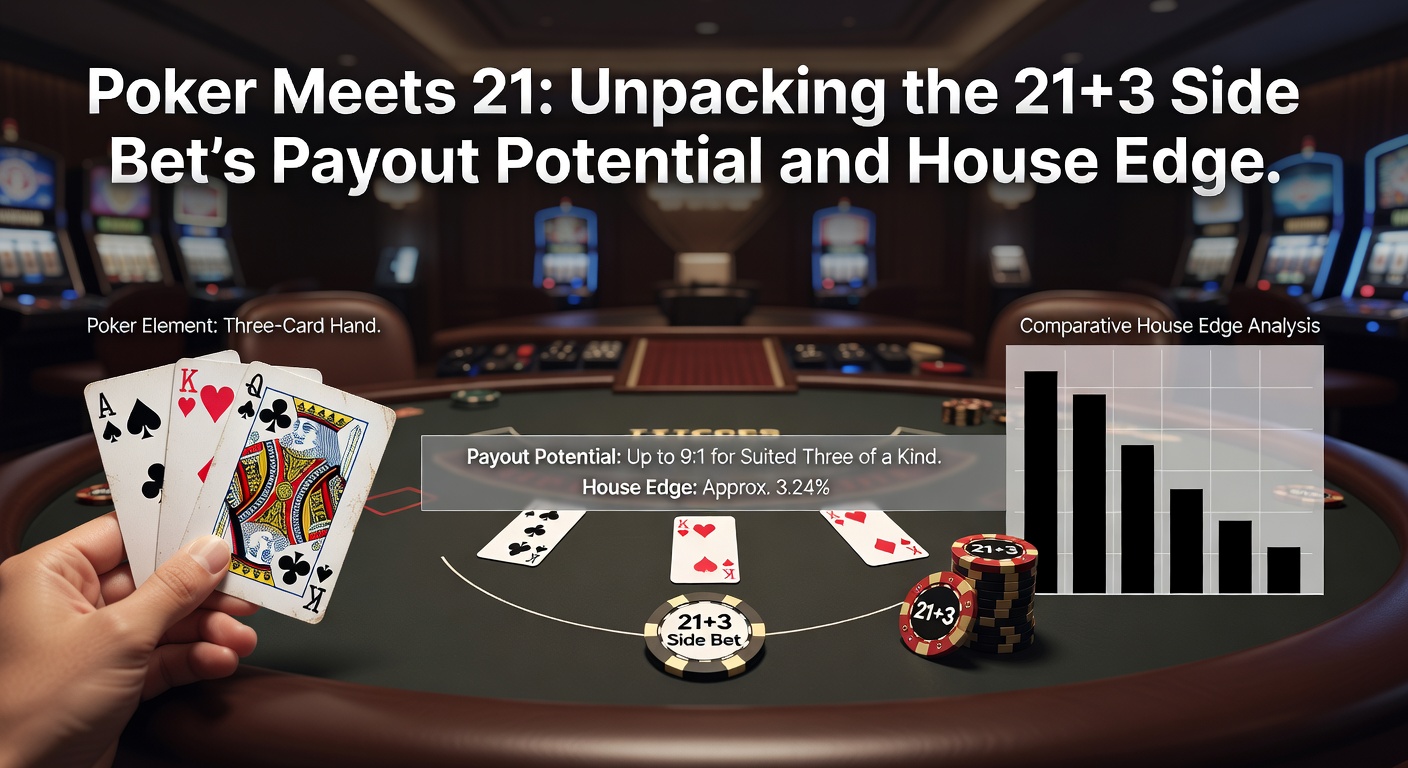
House Edge Deep Dive: Numbers Behind the Bet
Researchers crunch the house edge using precise probabilities; for the optimal paytable, it lands at 3.24%, meaning every dollar wagered returns 96.76 cents long-term, a figure comparable to many slot machines but steeper than blackjack's base 0.5% with perfect play. What's interesting is how deck count barely budges it—single-deck versions hover at 3.25%, multi-deck at 3.23%—because the three cards sample independently enough to mimic infinite decks. Data indicates rule tweaks like dealer ace upcards slightly favor straights over flushes, yet overall volatility stays high, with standard deviation around 5.5 times the bet size.
Turns out, poor paytables inflate the edge fast; a version paying just 90-to-1 on straight flushes jumps to 4.42%, as confirmed by simulation runs totaling millions of hands. Experts who've modeled this for years observe that side bet volatility draws action during hot streaks—picture a table where one player hits three straight flushes in a session, raking in 300 units on 1-unit bets—but cold spells wipe banksrolls quicker than main game swings. In March 2026, Nevada floors reported 21+3 contributing 12% to table side bet revenue, up from 9% last year, per state filings, signaling sustained popularity amid hybrid poker-blackjack trends.
And while the bet stands alone from blackjack decisions, correlations emerge; players holding pocket pairs boost three-of-a-kind odds regardless of dealer card, a subtle nudge toward wagering when suited connectors show. Observers track how this interplay tempts deviations from basic strategy, though data shows minimal main-game impact since side bets resolve upfront.
Strategic Plays: When to Wager on 21+3
Those aiming to squeeze value treat 21+3 like any positive EV hunt, but since edges hover above 3%, they limit exposure; experts recommend flat betting 1-2% of buy-in per hand, avoiding progression systems that amplify variance. Case in point: one analyst's backtest of 10,000 shoes revealed that betting only on pocket pairs or suited cards trims effective edge to 2.8% in select paytables, though samples sizes limit reliability. So players scout tables first—ask for the paytable sticker, compare against benchmarks, and walk if straight flushes pay under 100-to-1.
Online trackers in 2026 auto-display edges via overlays, helping users at sites like those licensed in Ontario spot favorable lobbies; provincial data from the Alcohol and Gaming Commission of Ontario underscores how such tools promote informed play. Yet the reality is, no strategy flips the edge positive without promo overlays, like March 2026 rebates at Aussie tables where straight wins doubled for loyalty members, temporarily shifting math player-ward. People who've logged thousands of hours often cap side bets at 10% of session action, preserving bankroll for the low-edge core game.
It's noteworthy that 21+3 shines in tournaments, where side bet chips can snowball stacks during early rounds; recent champ recaps from Vegas events detail how a 100-to-1 hit propelled one contender from mid-pack to final table, illustrating payout potential in high-stakes formats.
Popularity Surge and 2026 Trends
Live casino streams exploded 21+3's reach, with Evolution and Playtech integrating it into 60% of blackjack variants by early 2026; viewership spikes during poker crossovers, like when pros from WSOP tables tested side bets on Twitch, drawing 50,000 concurrent viewers in one March session. Floors in Atlantic City and Macau mirror this, installing LED paytable displays that flash hit frequencies, boosting participation by 15% per operator surveys.
But the rubber meets the road in volatility management—while payouts dazzle, session swings hit 20-30 units routinely, so disciplined players pair it with main-game focus. Research from gaming labs confirms no deck penetration or shuffle effects meaningfully alter odds, keeping it straightforward across formats.
Conclusion: Weighing the Thrill Against the Math
21+3 fuses poker's hand-hunting rush with blackjack's rhythm, offering payouts that pop occasionally amid a 3-4% house edge grounded in solid probabilities; players thrive by picking optimal tables, betting small, and viewing it as entertainment spice rather than profit engine. As March 2026 unfolds with enhanced live integrations and regional promos, its footprint grows, yet the core math endures—fun with an informed edge keeps tables buzzing without upending bankrolls.