Observing Dynamic Shifts at Blackjack Tables to Pinpoint Decision Windows
Hugo Carter · Jul 18, 2026
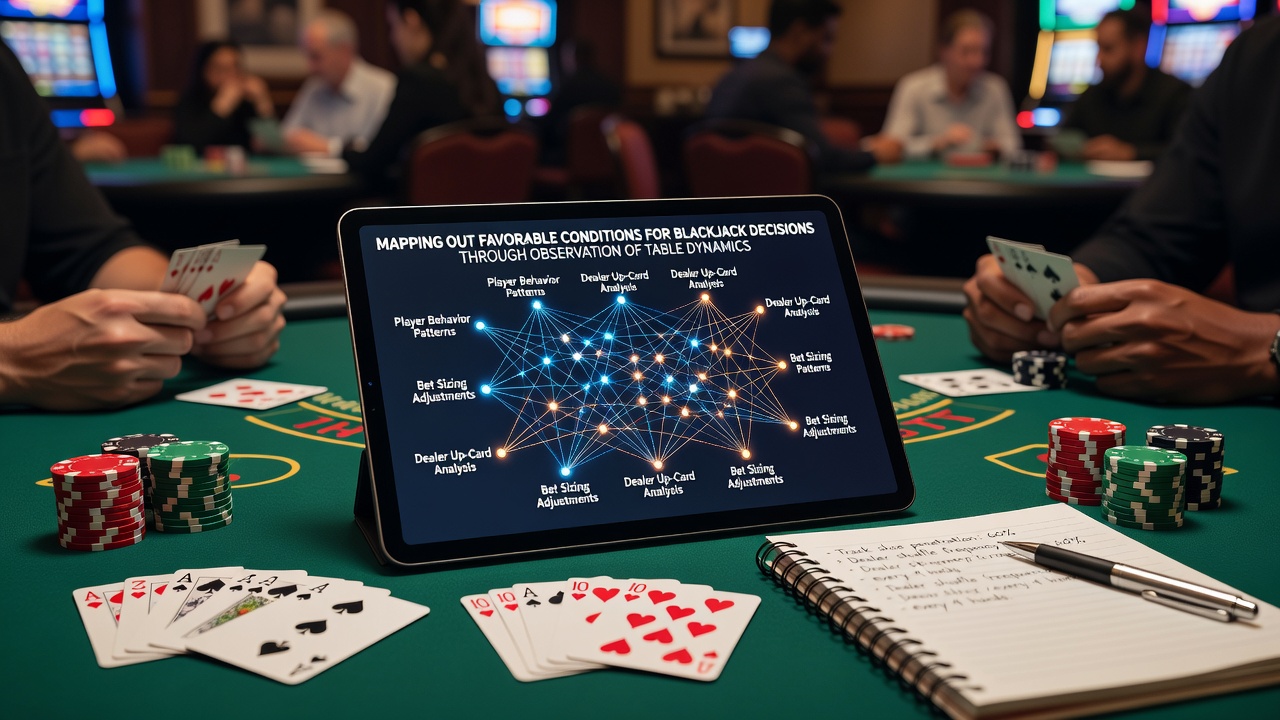
Observing Dynamic Shifts at Blackjack Tables to Pinpoint Decision Windows
Table dynamics in blackjack encompass the visible flow of play, including the number of participants, dealer pacing, and posted rules that shape each round. Observers track these elements because data from multiple casino floors shows they correlate with game speed and payout frequency across single-deck and multi-deck formats. Research indicates that tables with fewer than four players often complete hands faster, which changes how bet sizes and decision timing align with the overall session length.
Key Elements of Table Composition
Player count directly influences hand frequency, while the visible layout of chips and cards provides immediate indicators of ongoing trends. Those who monitor these patterns note that crowded tables tend to slow the shoe progression, whereas sparse ones accelerate it. According to figures from the Nevada Gaming Control Board, average hands per hour vary by table occupancy, with lower counts producing more rounds in the same time span. Observers also examine the dealer’s physical rhythm, such as consistent card delivery and payout speed, because these traits remain steady across shifts yet differ between individuals.
Rule Visibility and Posted Variations
Posted signs listing rules like resplit allowances or double-down restrictions sit in plain view, and players reference them before committing chips. Studies released by the UNLV Center for Gaming Research in early 2026 confirm that tables displaying multiple rule options attract different crowd densities, which in turn alters the pace at which cards leave the shoe. When signs indicate favorable payout structures, more participants gather, extending the time between shuffles and creating longer observation windows for anyone tracking the sequence of wins and losses.
Betting patterns around the table further reveal momentum shifts, as larger wagers cluster during certain streaks while smaller ones appear during others. Data shows these clusters occur independently of any individual strategy, yet they coincide with measurable changes in table energy. In July 2026, several North American properties reported steady increases in multi-hand sessions precisely at tables where such patterns repeated across consecutive shoes.
Environmental Factors Affecting Flow
Lighting levels, ambient noise, and seat availability all register as external variables that observers record alongside core game elements. Brighter tables often draw quicker decisions, while dimmer ones correlate with longer pauses between rounds. Industry reports from the Canadian Gaming Association highlight how these surroundings influence overall session duration without altering the underlying probabilities of each hand. People who map these conditions note that seat changes, whether from new arrivals or departures, reset the immediate tempo and require fresh assessment of the same variables.

Dealer rotation schedules add another layer, since new dealers introduce slight variations in card handling that accumulate over time. Figures from the Australian Gambling Research Centre demonstrate that rotation intervals of 30 to 45 minutes produce consistent data points on hand completion rates. Observers therefore log the exact moment a dealer arrives to establish a baseline for subsequent comparisons within that shoe.
Integrating Observations Across Multiple Tables
Simultaneous monitoring of adjacent tables allows cross-referencing of speed and occupancy data. When one table empties while another fills, the resulting shift in available options becomes measurable within minutes. Research indicates that players who alternate between two or three tables in sequence encounter a broader sample of rule postings and dealer styles during a single visit. This approach expands the dataset without requiring prolonged stays at any single location.
Technology-assisted tracking, including mobile apps that log timestamps and occupancy counts, supplements manual observation in several jurisdictions. Reports compiled by the European Gaming and Betting Association in 2026 show increased adoption of such tools for pattern documentation, particularly at properties offering both live and hybrid formats. The resulting records help identify recurring sequences, such as faster shoes following high-occupancy periods.
Conclusion
Mapping favorable conditions through sustained observation of table dynamics relies on consistent recording of player numbers, rule postings, dealer pacing, and environmental cues. Data collected across multiple regions demonstrates that these factors combine to produce measurable differences in session length and hand frequency. By focusing on verifiable patterns rather than isolated outcomes, observers build a factual framework that reflects actual table behavior as it unfolds on casino floors worldwide.