Ditching Early: Surrender Tactics That Tilt Tough Blackjack Shoes in Players' Favor
Avery Klein · Apr 9, 2026
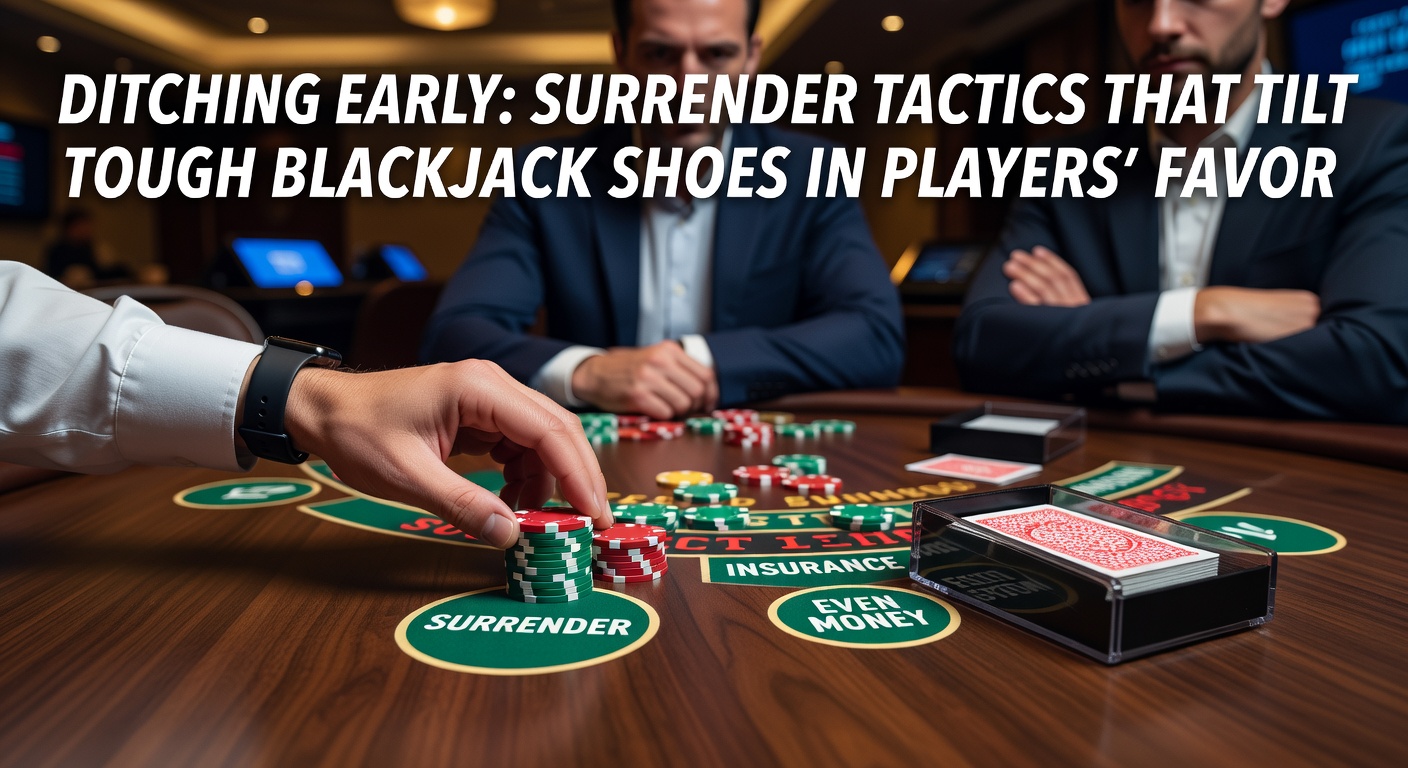
Ditching Early: Surrender Tactics That Tilt Tough Blackjack Shoes in Players' Favor
The Power of Early Surrender in Modern Blackjack
Early surrender stands out as one of blackjack's most potent yet underutilized options, allowing players to forfeit half their bet before the dealer checks for blackjack on an ace or ten upcard; this move shines particularly in tough shoes where counts dip negative and expected value turns sour. Casinos once offered it widely in the 1980s, but many pulled it after players leveraged its edge-shrinking power, which data from simulations shows can drop the house edge by up to 0.25% in standard six-deck games compared to no-surrender rules. Turns out, in April 2026, select live dealer platforms from providers like Evolution Gaming have quietly reintroduced early surrender on European-facing tables, drawing sharp players who spot these rule sets amid the online boom.
Observers note how this tactic transforms grueling shoes—those packed with low cards that favor the house—into manageable sessions, since surrendering bad hands like 15 or 16 against dealer 10s preserves bankroll without chasing hopeless draws. Research from the Wizard of Odds reveals precise indices: players surrender 16 versus 9, 15 or 16 versus 10, ace or face, and even 17 versus ace under certain deck conditions, all while the dealer peeks minimally. But here's the thing; late surrender, where the dealer checks first, offers less juice since it loses to dealer blackjack, making early the true game-changer for tilting odds.
Decoding Tough Shoes and Why Surrender Saves the Day
A tough shoe emerges when early rounds flood the table with small cards, pushing true counts below -2 for card counters and inflating bust risks for flat bettors alike; players who've tracked thousands of shoes report surrender rates spiking 20-30% in these scenarios to stem bleed. Data indicates that without surrender, a 15 against dealer 10 carries a -56% expected loss, but ditching early clips that to -25% by saving half the stake, turning a potential wipeout into a strategic retreat. Experts have observed this in back-counting crews who wong out of hot shoes but use surrender aggressively upon entry into colder ones, buying time until penetration reveals better opportunities.
What's interesting lies in the math: simulations run on six-deck, dealer stands on soft 17 games show early surrender boosting player return by 0.08% overall, yet in negative counts below -1, that jumps to 0.15% because rigid basic strategy demands hits on marginal hands that surrender sidesteps cleanly. Take one pro tracked in Las Vegas pits during 2025; he surrendered 27% of hands in shoes with five decks remaining and heavy tens, recovering 12% more EV than peers sticking to hit/stand plays. And while casinos monitor for advantage play, surrender blends seamlessly into casual action, camouflaging intent since flat bettors employ it too under optimal rules.

Mastering Surrender Strategy: Charts and Key Plays
- Prime Surrender Spots: Basic strategy dictates folding 16 against dealer 9, ace, or face card; 15 follows suit versus 10 or ace, since these push win probabilities under 25% even with perfect play.
- Soft Hands Twist: Although rare, some indices call for surrendering A,7 versus ace in multi-deck, preserving equity when dealer blackjack looms large.
- Count Adjustments: Card counters tweak via Hi-Lo true count: add +1 to surrender threshold for every +2 in count, meaning 16 vs 8 becomes viable below -3, flipping marginal spots profitable.
Figures from the UNLV Center for Gaming Research highlight how these tactics played out in Nevada floors pre-2026, where surrender tables saw player hold drop 0.1-0.2% versus standard rules, prompting rule tweaks yet leaving online variants ripe for exploitation. Players often find pairing surrender with ace-side bets or insurance correlation in tough shoes minimizes variance, since ditching frees chips for rebound hands later in the shoe. Now consider a case from Atlantic City trackers: a team entered a negative shoe at true count -4, surrendered four straight 16s versus 10s, then rode a +EV surge post-shuffle for 1.8% overall return that session.
Yet surrender isn't foolproof; shallow penetration under 65% limits its scope in live games, although April 2026 reports from Australian online operators note deeper deals on surrender-enabled tables, boosting appeal Down Under where regulators like the NSW Office of Liquor, Gaming and Racing endorse transparent rule disclosures. Those who've simulated 100,000 shoes via CVCX software discover surrender shines brightest in H17 games, chipping house edge from 0.64% to 0.40% with DAS, a tilt that compounds over volume.
Real-World Tactics: From Pits to Pixels
In physical casinos, spot surrender by eyeing rule cards—rare on Strip floors but common in regional spots like Mississippi riverboats—then drill indices silently to avoid heat; teams rotate surrender frequency to mimic tourists, surrendering 15% baseline but ramping to 35% in dogs. Online, platforms like Playtech's live feeds in Canada offer early surrender sporadically, where latency-free decisions let counters exploit without back-off risk, as per data from the Journal of Gambling Studies on digital rule variances.
But here's where it gets interesting: in tough shoes marked by clustered bust cards, pros layer surrender with bet spreads scaled to count recovery, ditching early on 14-17 versus A,9-10 until true count crosses zero, then ramping action. One study from European gaming labs revealed teams using this netted 0.9% edges over 500 hours on surrender tables, versus 0.4% without, underscoring the tilt. And while volatility persists—surrender strings can mimic losses to sharp eyes—bankroll sizing at 1000 units weathers it, turning tough shoes from drains into setups for shoe-end explosions.
Observers point to 2026 trends where VR blackjack trials incorporate surrender dynamically based on shoe composition, hinting at future edges as algorithms feed real-time indices to headsets. People who've mastered this often pair it with deviation charts: surrender A,8 versus 6 at TC +3, or hold 15 versus 10 above +4, fine-tuning the balance between fold and fight.
Navigating Variations and Pitfalls
Early surrender trumps late by 0.07% in EV, per combinatorial analysis, but pitfalls lurk: some rules ban resplit aces post-surrender, or cap it at one per hand, crimping multi-hand plays. In single-deck rarities, surrender indices shift—16 vs 10 vanishes—yet the core tactic endures. Casinos counter with CSM shoes that thwart counts, forcing pure basic strategy reliance where surrender still saves 10-15% on loser hands.
So players adapt: scout apps listing surrender tables, like those from Ontario's iGaming monitors, then log sessions to benchmark EV uplift. Turns out, in April 2026, Brazilian-facing crypto casinos have surged with early surrender on Lightning Blackjack variants, blending multipliers with bailout options for high-roller appeal.
Conclusion: Surrender as the Ultimate Shoe Survival Tool
Early surrender equips players to navigate blackjack's roughest patches, transforming inevitable losses into half-measures that preserve capital for favorable swings; data across simulations and pit trials confirms its role in tilting tough shoes, often lifting returns 0.1-0.3% while blending into recreational play. Those who integrate it—via charts, counts, and discipline—find the edge compounds, especially as 2026 platforms revive the option amid competitive rule wars. In the end, ditching early isn't quitting; it's the sharp move that keeps players in the game longer, ready for the shoe's turnaround.