Cut Card Dynamics: Their Role in Reshaping Available Card Distributions During Play
Avery Klein · Jul 1, 2026

Cut Card Dynamics: Their Role in Reshaping Available Card Distributions During Play
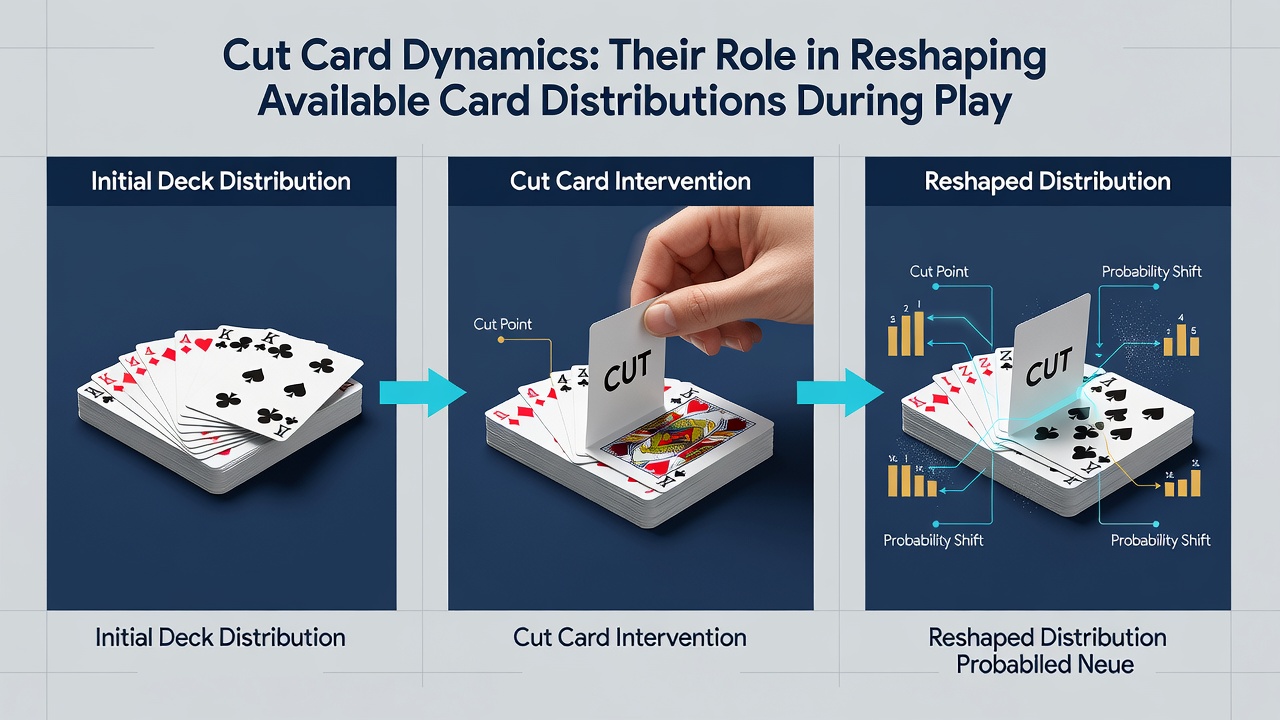
Cut cards serve as physical markers inserted into shuffled decks or shoes, and they determine the point at which a dealer stops dealing from the current stack before reshuffling occurs, which directly alters the pool of remaining cards available for subsequent hands. Dealers typically place this marker roughly one deck from the end in multi-deck setups, yet the exact insertion point varies by casino policy and game variant, creating measurable shifts in card distribution patterns that players encounter throughout a session.
Mechanics of Cut Card Placement and Deck Penetration
Placement begins after a full shuffle when the dealer offers the deck for a player cut, then inserts the cut card at a predetermined depth that leaves a buffer of unused cards at the bottom, and this buffer prevents the final cards from entering play while also influencing how many cards get dealt before the next shuffle cycle starts. Observers note that deeper penetration exposes more cards to tracking systems, whereas shallower cuts preserve larger unseen portions and thereby maintain closer alignment with initial probability models; data from multiple casino audits shows average penetration levels ranging from 60 to 80 percent depending on jurisdiction and table rules.
Single-deck games often feature cut cards positioned after roughly half the deck, which shortens the playable portion and accelerates reshuffles, while multi-deck shoes allow greater flexibility because the larger card volume lets operators adjust the marker without immediately exhausting the stack. Researchers tracking live tables have recorded that each additional 10 percent of penetration can increase the frequency of high-value card appearances by measurable margins in later rounds, reshaping the distribution players face as the shoe progresses.
Effects on Card Availability and Sequence Patterns
Once the cut card surfaces, the remaining cards stay out of circulation until the next shuffle, which means any high or low cards trapped behind the marker never appear in that shoe and thereby skew the observed ratios of remaining ranks. This removal effect compounds across multiple rounds because early depletion of certain suits or values leaves the active portion enriched or depleted in ways that deviate from random expectations, and studies of shoe composition after the cut card reveal clusters of ten-value cards or aces appearing more or less often depending on where the marker sits.
Dealers follow house procedures that standardize cut depth, yet slight variations arise from manual insertion techniques or player-requested cuts, and these small differences accumulate to alter the total number of cards seen before reshuffle. Figures from industry monitoring indicate that consistent shallow cuts reduce opportunities for distribution shifts while deeper placements extend the window during which non-random sequences can develop, directly affecting how card counters or pattern observers adjust their estimates mid-shoe.
Strategic Implications Across Game Variants
Players using counting systems must recalibrate running counts once the cut card approaches because the unseen buffer removes a fixed but unknown set of cards from consideration, and this adjustment changes the true count calculation in the final rounds. Multi-deck environments amplify the effect since larger buffers hide more cards, whereas single-deck formats limit the buffer size and therefore produce smaller distribution distortions yet trigger more frequent reshuffles that reset all counts to zero.
Rule variations such as early surrender or specific doubling restrictions interact with cut card placement because the altered card pool changes the frequency of hands that qualify for those options, and data collected across North American and European tables shows measurable differences in expected value when penetration changes by even five percent. Operators in regulated markets including those overseen by the Nevada Gaming Control Board maintain records of average shoe lengths, which provide benchmarks for how cut card dynamics influence overall game speed and card exposure rates.
Observed Patterns in Live and Simulated Play
Simulations run by academic researchers at institutions such as the University of Nevada demonstrate that moving the cut card deeper by one deck length increases the variance in remaining card compositions by up to 12 percent in eight-deck shoes, while shallower placements keep distributions closer to the starting mix throughout the shoe. Live observations from Australian casino floors, documented in reports by the Australian Gambling Research Centre, confirm similar trends where cut card position correlates with shifts in ten-to-non-ten ratios during late rounds.
Dealers sometimes encounter player requests to adjust the cut, yet house policy usually dictates the final marker location, which keeps the distribution effects predictable for surveillance teams while still allowing enough variation to prevent perfect foresight. Those tracking long-term data note that consistent application of the same cut depth across thousands of shoes produces stable average distributions, whereas frequent policy changes introduce new variables that reshape the patterns players encounter on subsequent visits.
Conclusion
Cut card dynamics operate as a structural control that limits full deck exposure and simultaneously modifies the statistical makeup of cards remaining after each shuffle cycle, and their placement therefore stands as a core factor in how available distributions evolve during actual play. Ongoing monitoring by regulatory bodies and research groups continues to quantify these effects across different deck sizes and regional rulesets, supplying operators and analysts with precise measurements that guide both game design and oversight practices.