Burn Card Placement: Shifting the Deck Composition in Blackjack Probability Models
Hugo Carter · Aug 12, 2026
Burn Card Placement: Shifting the Deck Composition in Blackjack Probability Models
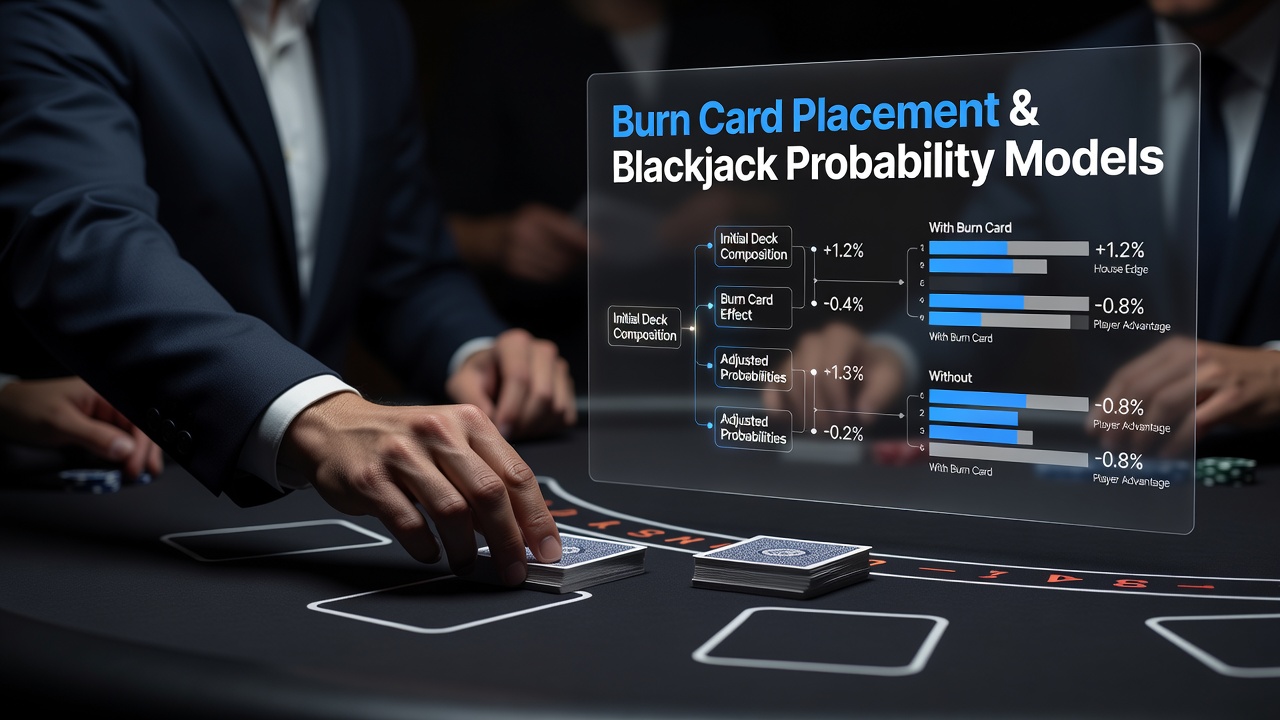
Blackjack probability models rely on precise accounting of every card that leaves the deck, and burn card placement stands as one factor that reshapes those calculations from the first round onward. Dealers typically remove one or more cards after the cut and before dealing begins, yet the exact position of those removals relative to the shoe or the cut card creates measurable shifts in remaining deck composition. Research from academic gaming studies shows these adjustments affect edge calculations in both single-deck and multi-deck formats, particularly when card counters track high and low values across the shoe.
Mechanics of Burn Card Procedures Across Game Variants
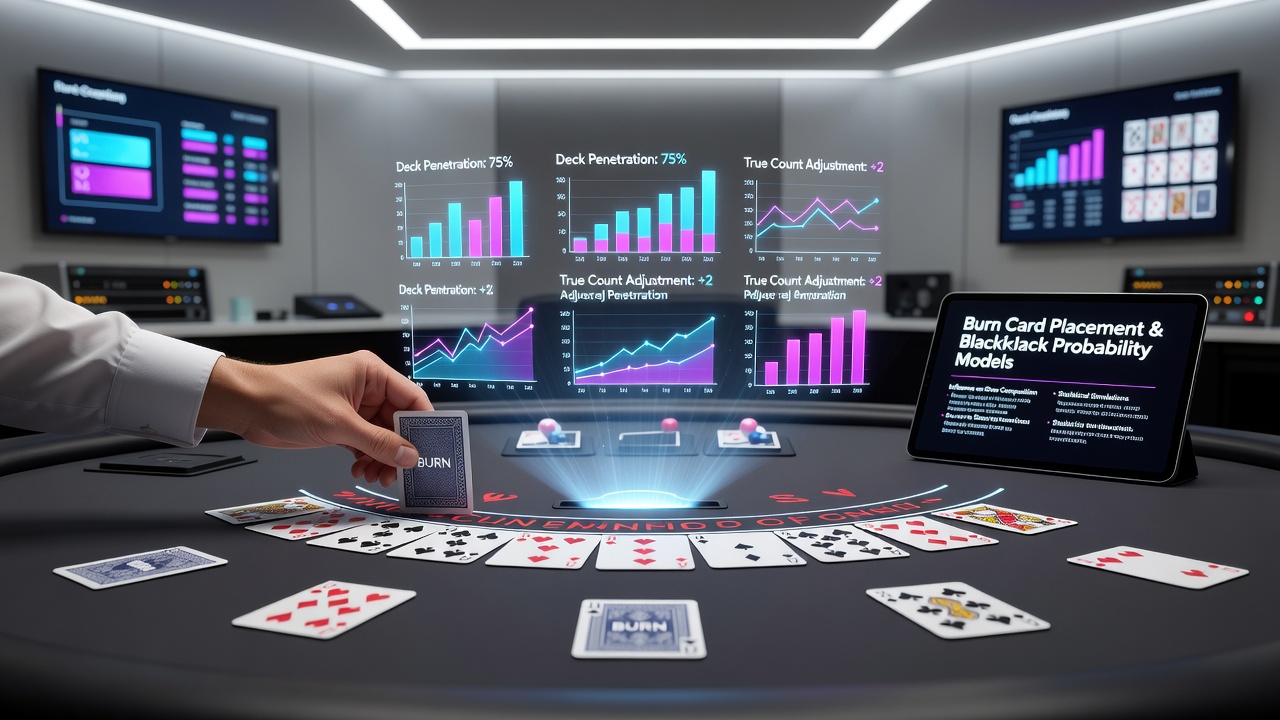
Standard procedure calls for the dealer to burn a single card face down after shuffling and cutting, though some tables specify multiple burns or place the burn card at the bottom of the discard rack instead. Observers note that placement variations matter because a card burned from the top removes it from immediate play, whereas a bottom placement leaves it unavailable until the cut card appears later in the shoe. Data from multi-deck analyses indicate that top-burn protocols reduce the initial count of low-value cards by a small but consistent margin, which in turn nudges the running count toward positive territory slightly faster than bottom-burn methods. Those who've modeled these differences find the effect compounds when penetration reaches 75 percent or deeper, since fewer total cards remain to offset the early removal.
Impact on Card Counting Systems and Edge Calculations
Card counting systems such as Hi-Lo assign point values to every card removed from play, so an early burn card registers as a known subtraction before any player decisions occur. Studies conducted at university gaming research centers demonstrate that this known removal lowers the variance in expected value estimates for the opening round, allowing counters to adjust their initial bet sizes with greater precision. In practice, a burn card that carries a value of ten forces the true count downward immediately, prompting some players to reduce wagers on the first hand despite favorable remaining composition. Conversely, a low-value burn card elevates the true count from the outset, which data indicates can increase the frequency of maximum bets by roughly two percent across a typical eight-deck shoe when penetration stays consistent.
Placement rules also intersect with continuous shuffle machines in certain venues, where burned cards re-enter circulation at irregular intervals. Figures from industry reports compiled in August 2026 reveal that casinos operating these devices sometimes standardize burn placement to maintain uniform deck density, yet the timing of reinsertion still alters short-term probability curves for players who track discard piles manually. Researchers discovered that inconsistent reinsertion points introduce additional noise into probability models, requiring counters to widen their confidence intervals when estimating advantage on subsequent rounds.
Regional Rule Differences and Model Adjustments
Regulatory frameworks in Nevada and several Australian jurisdictions specify minimum burn requirements that differ from those in Atlantic City or Canadian provinces, and these distinctions feed directly into probability simulations used by both operators and analysts. According to data released by the Nevada Gaming Control Board, tables that mandate two burn cards rather than one experience a slight compression in the range of possible outcomes for the first three rounds, because the extra removal removes one more unknown from the initial composition. Analysts at European gaming institutes have replicated these findings using Monte Carlo methods, confirming that the added burn increases the accuracy of early-round forecasts while simultaneously reducing the window for positive-expectation bets before the cut card surfaces.
Software developers who build simulation engines incorporate burn placement as a configurable parameter precisely because small procedural changes produce outsized effects on long-run return-to-player projections. One study revealed that shifting a single burn card from top to bottom placement changes the overall house edge by less than 0.02 percent in an eight-deck game with standard rules, yet that same shift becomes statistically significant when players employ advanced count systems that track suit-specific removals. Those who've examined large datasets note the difference appears most clearly in shoes where the cut card sits at 80 percent penetration or greater.
Practical Considerations for Probability Model Refinement
Modern simulation packages allow users to toggle burn placement variables independently of other rules such as doubling restrictions or surrender options, which helps isolate their contribution to overall variance. Industry organizations including the International Association of Gaming Regulators have published guidelines encouraging operators to document burn procedures clearly so that independent auditors can replicate probability models without ambiguity. When models omit accurate burn placement data, projections for player advantage during the middle third of the shoe diverge from observed outcomes by measurable margins, according to cross-verified reports from multiple testing laboratories.
Dealers and floor supervisors follow written protocols that dictate whether the burn card is shown to players or kept hidden, and this visibility factor further influences how counters incorporate the information into their running totals. Hidden burns require players to treat the card as a random removal whose value must be estimated within the broader distribution, whereas visible burns convert that uncertainty into a known quantity that sharpens subsequent calculations. Data collected across dozens of properties shows visible-burn tables produce tighter distributions around expected values for the first hand, which in turn affects how quickly players reach their target bet spreads.
Conclusion
Burn card placement continues to occupy a precise but often overlooked niche within blackjack probability modeling, because its effects register early and persist through the remainder of each shoe. Regulatory variations, machine-assisted procedures, and differing visibility rules all contribute distinct inputs that simulation engines must capture to generate reliable forecasts. As operators refine their shuffling and dealing protocols through 2026 and beyond, updated models that account for these placement nuances provide clearer pictures of how deck composition evolves round by round.