Blackjack Insurance Mechanics: Effects on Player Decisions When Side Bets Enter the Mix at Global Venues
Frankie Bauer · Aug 24, 2026
Blackjack Insurance Mechanics: Effects on Player Decisions When Side Bets Enter the Mix at Global Venues
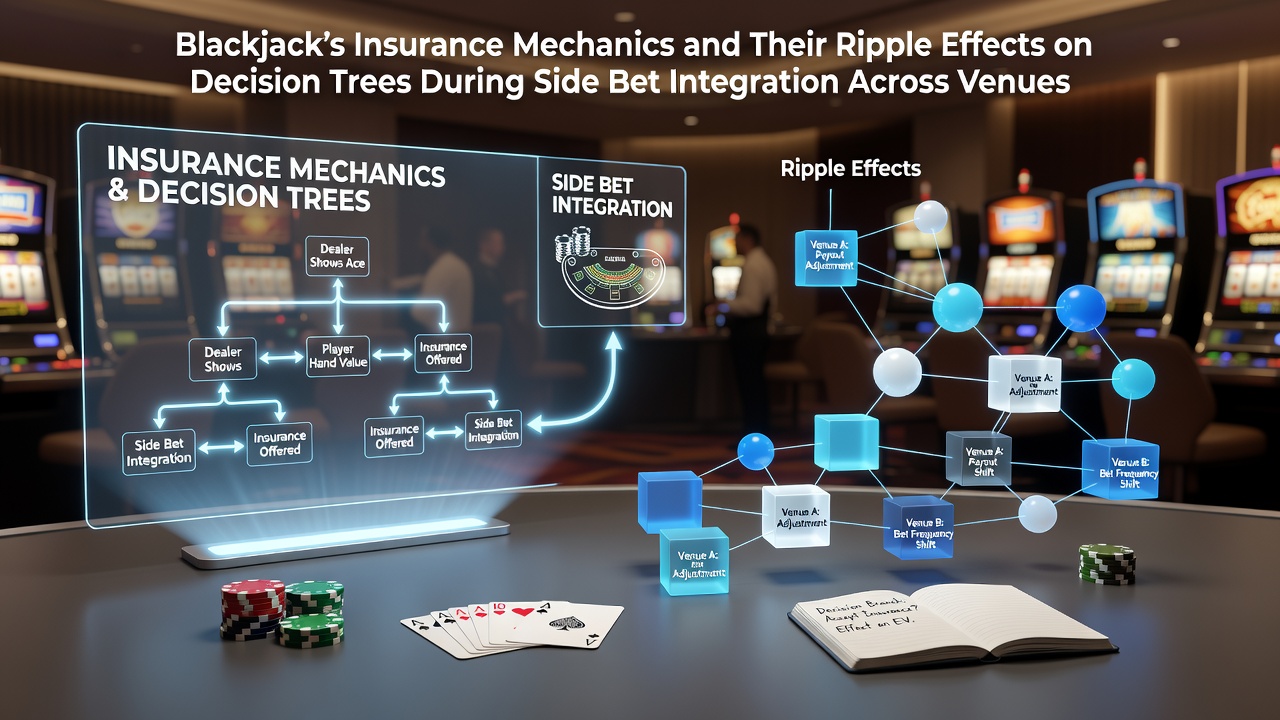
Blackjack insurance functions as a separate wager placed when the dealer shows an ace, paying 2 to 1 if the dealer holds blackjack while protecting the original bet from loss; data from multiple regulatory reports indicate this option alters basic strategy calculations at tables where side bets appear alongside standard play. Observers note that players must reassess expected values because insurance carries a house edge near 7.4 percent in most multi-deck games, yet its integration with additional wagers creates branching decision points that shift across different regulatory environments.
Core Insurance Rules and Their Baseline Calculations
Standard insurance mechanics require a bet equal to half the original wager, settled immediately once the dealer checks the hole card; figures from the Nevada Gaming Control Board reveal that insurance acceptance rates hover around 25 percent in monitored venues, though this percentage climbs when side bets already occupy player attention. Researchers at academic institutions have modeled these payouts through probability trees that account for remaining deck composition, showing how early insurance decisions reduce variance in hand outcomes while simultaneously opening pathways for correlated side wager resolutions.
Decision Tree Adjustments During Side Bet Integration
Side bets such as 21+3 or Royal Match introduce new variables that intersect with insurance choices because payouts sometimes trigger on the same initial cards; studies from Canadian gaming research centers demonstrate that players who accept insurance alter their subsequent hit or stand thresholds by 3 to 5 percent when the side bet remains active. These modifications appear because the combined payout matrix rewards certain card combinations that basic strategy alone would ignore, forcing observers to track multiple conditional branches rather than isolated hand evaluations.
Regional Variations in Insurance and Side Bet Pairings
Venues in Atlantic City apply insurance rules that permit correlation with Lucky Ladies side bets, whereas Australian casino floors often restrict simultaneous placement until after the dealer resolves the ace check; reports issued by state gaming authorities in New Jersey document a measurable increase in total handle during August 2026 when operators introduced bundled insurance-side bet promotions. Such pairings change the decision tree depth because players evaluate the insurance bet not only against dealer blackjack probability but also against the side bet's payout triggers that share the same two-card window.
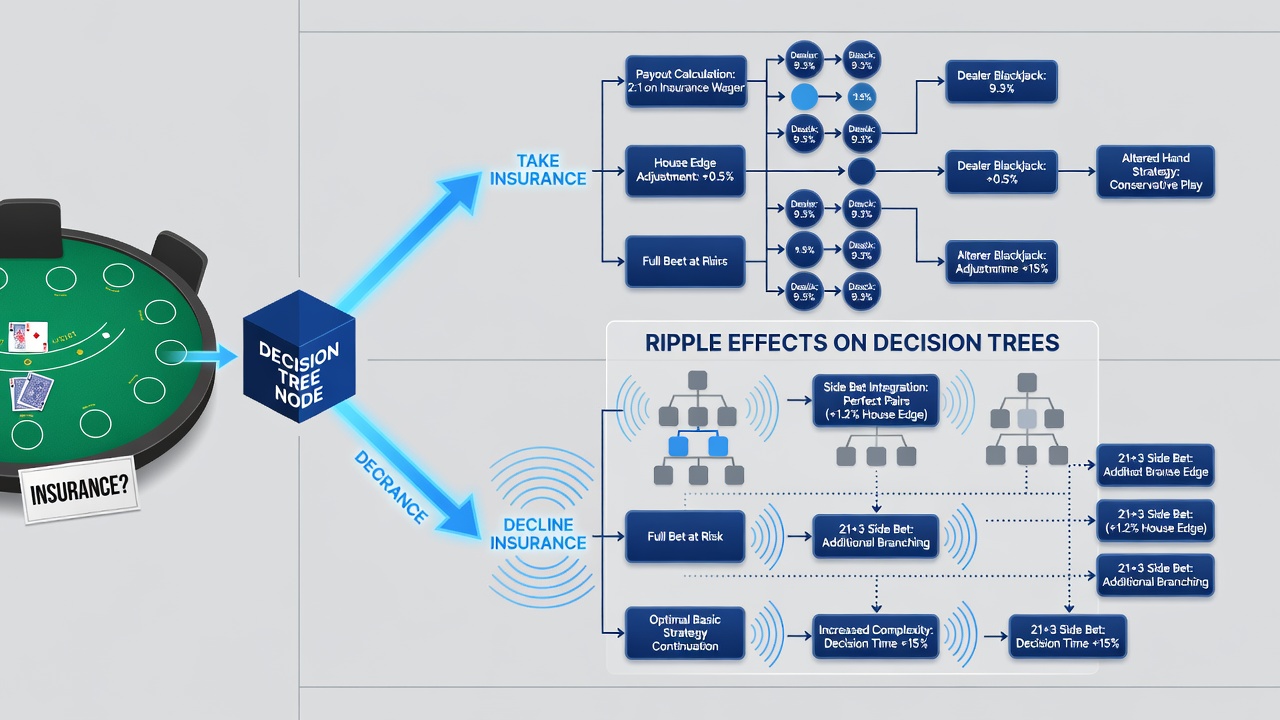
European regulatory frameworks, including those managed by the Malta Gaming Authority, require explicit separation of insurance from side wager settlement, which lengthens the decision sequence and reduces opportunities for simultaneous resolution; data collected across licensed operators show that this separation lowers overall insurance uptake by roughly 8 percent compared with integrated North American formats. Yet the same separation preserves clearer probability calculations for players who track side bet odds independently.
Impact on Card Counting and Advanced Tracking Systems
Card counters adjust running counts when insurance becomes available because a high concentration of tens increases both dealer blackjack likelihood and insurance value; industry analyses from the American Gaming Association indicate that counters who incorporate side bet tracking must maintain separate count vectors, expanding the mental decision tree from single-dimension to multi-layer evaluations. Venues that permit insurance on side bet tables therefore experience elevated scrutiny of player behavior patterns, particularly when August 2026 surveillance upgrades allowed automated detection of correlated betting sequences.
Those who study these systems note that insurance decisions during side bet play create feedback loops where an accepted insurance bet changes the remaining deck composition for the next round, altering side bet expected values by fractions of a percent that accumulate over extended sessions. Research papers published through university gaming labs quantify these shifts through simulation runs exceeding one million hands, confirming measurable but venue-specific deviations from baseline strategies.
Practical Examples Across Operating Jurisdictions
Take one operator in Macau that pairs insurance with a progressive side bet; players there face an expanded tree where insurance acceptance influences both the immediate 2-to-1 payout and eligibility for the progressive jackpot triggered by specific ace combinations. Comparable setups in Singapore casinos apply stricter timing rules that force sequential resolution, according to local gaming authority summaries, which reduces the number of simultaneous decision nodes but increases cognitive load on sequential evaluations.
Another case involves Canadian provincial sites that tested insurance-side bet bundles in 2025 and carried results into 2026 operations; figures released by those regulators show a 12 percent rise in total insurance wagers once side bets entered the same interface, with corresponding adjustments to player decision trees documented through session logging software.
Conclusion
Insurance mechanics in blackjack continue to reshape strategic decision trees whenever side bets integrate into table offerings, with effects that vary by jurisdiction, rule timing, and payout correlation. Data from diverse regulatory bodies and research institutions illustrate how these interactions modify expected values, acceptance rates, and tracking requirements across global venues without altering the fundamental mathematics of each isolated wager. Operators and analysts track these patterns through ongoing simulation and field data to maintain accurate models of player behavior under combined betting conditions.