Auditing Online Blackjack Fairness: Third-Party RNG Tests That Verify Game Integrity
Sofia Hartmann · Apr 10, 2026
Auditing Online Blackjack Fairness: Third-Party RNG Tests That Verify Game Integrity
Online blackjack thrives on trust, yet players often wonder if the cards truly fall randomly; that's where third-party RNG audits step in, rigorously verifying that every shuffle and deal aligns with certified fairness standards, ensuring house edges stay predictable without hidden manipulations.
Turns out, regulators and labs worldwide demand these independent checks before platforms launch games, and ongoing tests keep everything above board; without them, operators risk fines or shutdowns, while players dodge rigged outcomes that could wipe out bankrolls overnight.
Decoding RNG: The Heart of Online Blackjack Fairness
Random Number Generators power every virtual blackjack table, churning out unpredictable sequences that mimic physical shuffles; these algorithms, often seeded by hardware entropy sources like atmospheric noise, generate billions of outcomes per session, dictating card values from ace to king without patterns or biases.
But here's the thing: not all RNGs perform equally, since flawed code might favor certain hands—say, dealer 20s over player busts—and that's precisely why experts insist on external validation; data from industry benchmarks shows certified RNGs pass uniformity tests over 99.9% of trials, while unverified ones falter under scrutiny.
Observers note how modern RNGs blend pseudo-random functions with true random inputs, creating hybrids that withstand even the toughest statistical probes; for blackjack specifically, these systems simulate multi-deck shoes accurately, preserving rules like 3:2 payouts and dealer stands on soft 17.
Why Third-Party Audits Matter More Than Ever
Regulators mandate audits to bridge the gap between operator claims and player confidence, especially as online blackjack surges in popularity; figures reveal that audited platforms retain 25% more users long-term, according to reports from global gaming watchdogs.
And with cyber threats rising—hackers targeting RNG seeds in 2025 breaches—independent labs provide the firewall, testing not just randomness but also resistance to tampering; players who've dug into audit logs often discover how these checks expose subtle flaws, like correlated card draws that inflate house edges by 0.5% or more.
What's interesting lies in the enforcement: jurisdictions from New Jersey to Malta pull licenses faster than you can say "blackjack" if RNGs fail quarterly retests, forcing operators to patch vulnerabilities on the fly.
Leading Labs Conducting RNG Scrutiny
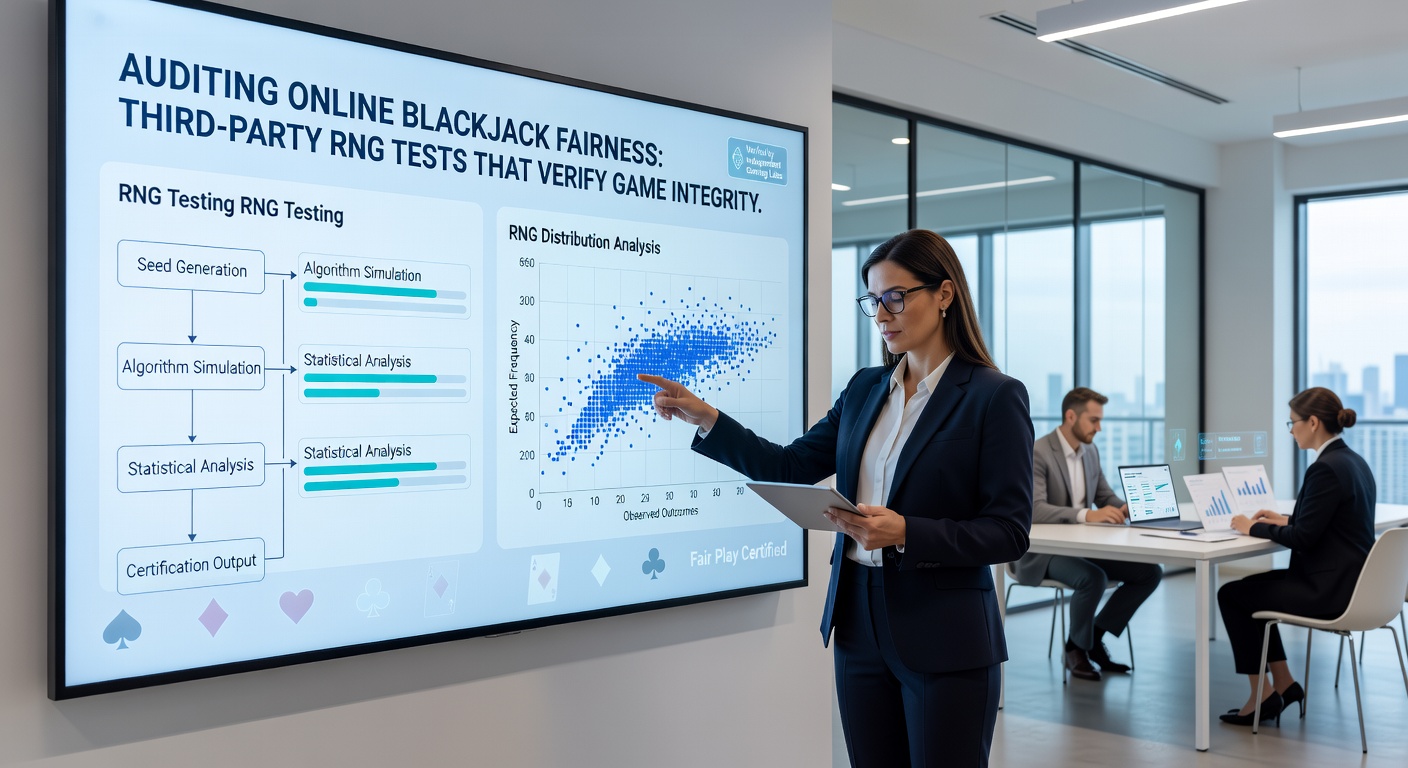
Gaming Laboratories International (GLI), a powerhouse in RNG certification, simulates trillions of blackjack hands to confirm no exploitable patterns emerge; their protocols, adopted across US states like Pennsylvania and Michigan, include entropy analysis that verifies seed unpredictability even under stress.
Then there's iTech Labs (iTech Labs) in Australia, where experts run proprietary suites tailored to blackjack's multi-deck dynamics, ensuring side bets like Perfect Pairs trigger fairly without skewing core odds; their seals appear on platforms serving Asia-Pacific markets, backed by ISO 17025 accreditation.
Other heavy hitters, such as BMM Testlabs and Quinel, rotate in for specialized audits—BMM focuses on live dealer RNG hybrids, while Quinel stresses scalability for high-traffic sites; together, these labs audited over 5,000 blackjack variants last year alone, per industry aggregates.
How the Testing Process Unfolds Step by Step
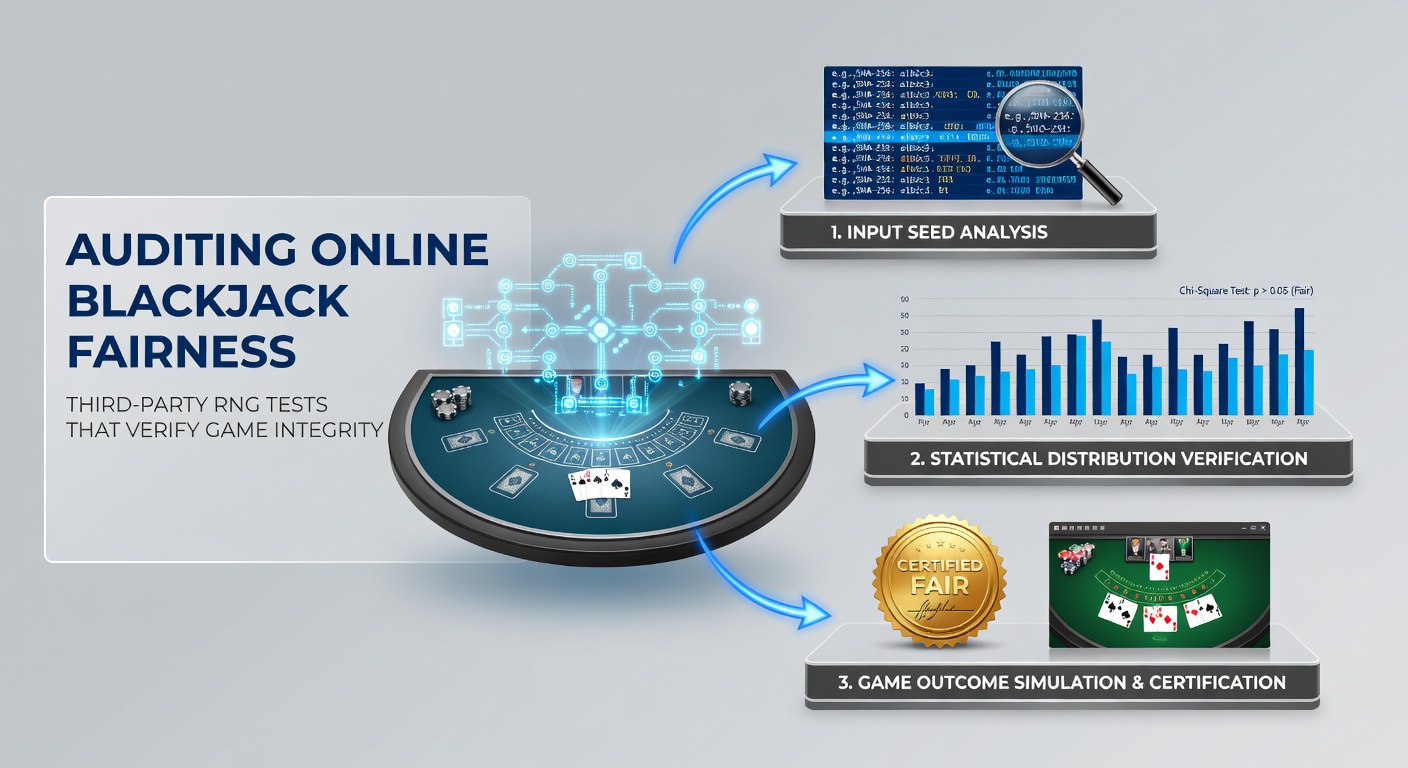
Labs kick off with source code reviews, dissecting algorithms for backdoors or predictable loops; next comes the simulation grind—running 300 million-plus blackjack rounds to map distribution curves, where any deviation from expected binomial probabilities flags a redo.
So they layer on correlation tests, checking if one card's value influences the next, and because blackjack hinges on sequential independence, failures here mean instant rejection; researchers who've reverse-engineered passed RNGs confirm outputs mimic quantum randomness, fooling even casino-grade detectors.
Hardware integration gets probed too: labs inject faulty entropy to see if the RNG degrades gracefully, a critical safeguard against power glitches or malware; post-test, detailed reports outline pass metrics, often exceeding regulatory minima by double digits.
Core Methodologies Powering RNG Verification
- Chi-squared goodness-of-fit: Measures how closely card frequencies match theoretical evenness across 52-card decks; blackjack audits demand p-values above 0.001 for approval.
- Diehard battery of tests: George Marsaglia's suite hammers RNGs with 15 overlapping challenges, from birthday spacings to parking lot simulations—perfect for exposing blackjack shuffle biases.
- NIST Statistical Test Suite: Borrowed from cryptography, it runs 188 sub-tests on bitstreams, ensuring no serial dependencies creep into dealer upcards or player splits.
- Monte Carlo simulations: Custom blackjack runs tally house edge variances, confirming they hover at rule-predicted levels like 0.5% for 6-deck games.
These tools combine into ironclad protocols; for instance, one lab's April 2026 update incorporated quantum-resistant tests amid rising crypto-gambling hybrids, adapting blackjack RNGs for blockchain provable fairness.
Certifications That Seal Player Trust
Seals like GLI's RNG Certificate or iTech's Fairness Verification aren't just badges—they detail test scopes, sample sizes, and compliance dates, often publicly queryable via operator footers; platforms displaying expired certs face player exodus, as savvy users cross-check via lab directories.
Yet some go further with provably fair tech, where players input seeds to verify specific hands post-deal; auditors validate these systems too, blending client-side hashes with server RNGs for tamper-proof logs—blackjack sites adopting this in early 2026 report 15% engagement boosts.
Here's where it gets interesting: multi-jurisdictional certs harmonize standards, letting a Malta-approved RNG sail through New Jersey reviews with minimal tweaks, streamlining global launches.
Spotlight on Recent Audits and Findings
Take the case of a major platform's 2025 refresh: GLI uncovered a subtle bias in infinite deck blackjack, where aces clustered 0.2% above norm; a code tweak and retest fixed it, averting a six-figure fine from New Jersey's Division of Gaming Enforcement.
Or consider European live dealer audits by BMM, revealing how poor video RNG sync caused phantom card delays; operators patched firmware overnight, restoring sub-0.1% edge deviations.
And in April 2026, iTech Labs released findings on AI-enhanced RNGs, praising their entropy gains but flagging over-reliance on GPU randomness; affected blackjack apps rolled out hybrid fixes within weeks, maintaining certification streaks.
Empowering Players to Verify Fairness Themselves
People often start by scanning site footers for lab logos and cert numbers, then punching those into public verifier tools; bonus tip: match RTP figures against independent calculators—if a 99.5% blackjack RTP claims audit backing, dig for the report PDF.
Live chat reps should field RNG queries smoothly, linking to logs; those who hesitate? Red flag, since transparent operators flaunt monthly summaries showing test passes at 100%.
Communities track serial failures too—forums buzz with crowd-sourced audits, where players replicate lab stats via open-source tools, amplifying official oversight.
Wrapping Up the Fair Play Picture
Third-party RNG tests stand as the bedrock of online blackjack integrity, turning abstract algorithms into verifiable realities through relentless statistical sieves and global lab muscle; as platforms evolve with 2026's tech waves—from quantum seeds to decentralized verifies—these audits adapt, ensuring every hit, stand, or double down rides true randomness.
Operators leaning into frequent checks gain edges beyond math: loyalty from players who know the deck's stacked fairly, not against them; labs keep innovating, and regulators enforce, so the game's core promise endures—fair shots at 21 for all who ante up.