Adapting Blackjack Insurance Strategies to Multi-Deck Changes in Live-Digital Hybrids
Hugo Carter · Aug 1, 2026
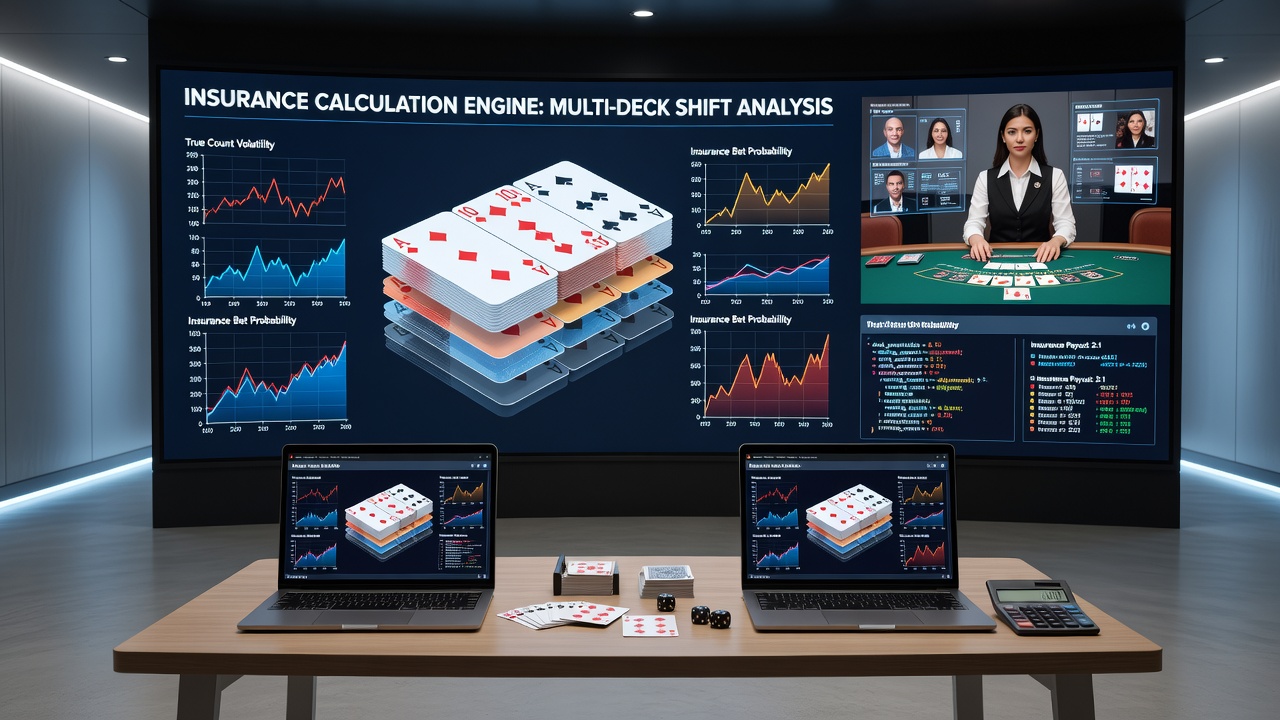
Adapting Blackjack Insurance Strategies to Multi-Deck Changes in Live-Digital Hybrids
Core Mechanics of the Insurance Side Bet
Insurance functions as a separate wager offered when the dealer reveals an ace as the upcard, and players can place up to half their original bet on whether the dealer holds a ten-value card in the hole to complete a blackjack. The payout stands at 2 to 1 if the dealer has blackjack, which offsets the loss on the main hand in many cases. Data from probability models show that the dealer completes blackjack roughly 30.8 percent of the time in a standard multi-deck game, making the insurance bet carry a house edge near 7.4 percent under basic strategy conditions without card counting adjustments.
Shifts in remaining deck composition alter these odds as cards are removed during play. In multi-deck shoes starting with six or eight decks, the initial probability remains stable until depletion occurs, yet researchers have documented that high concentrations of ten-value cards left in the shoe increase the likelihood the dealer holds blackjack when an ace appears.
Impact of Deck Composition on Insurance Thresholds
Multi-deck compositions change the true count required for insurance to become a positive expectation play. Studies indicate that in six-deck games the insurance correlation typically activates around a true count of plus three, while eight-deck setups push the threshold slightly higher because the dilution effect of additional neutral cards delays the signal. Observers note that players who track remaining tens versus non-tens can adjust their insurance decisions dynamically as the shoe progresses, and figures from simulation software reveal win rate improvements of 0.2 to 0.5 percent when insurance is taken only at appropriate counts.
Hybrid formats combine physical cards in live dealer streams with digital interfaces that display running counts or composition data in real time. During August 2026 several platforms introduced synchronized tools that update insurance recommendations based on live deck penetration, allowing remote participants to mirror decisions made by on-site counters without direct access to the physical shoe.
Live Dealer Versus RNG Digital Variations
Live dealer tables preserve physical shuffling sequences and visible card removal patterns, whereas RNG-driven digital games often employ continuous or pseudo-shuffled decks that reset composition after each round. Research published by the University of Nevada, Las Vegas Center for Gaming Research shows that insurance calculations in pure RNG environments revert to baseline probabilities every hand because the virtual deck does not carry forward depletion effects. Hybrid systems bridge these models by streaming footage from physical tables while routing bets through digital platforms, which creates a middle ground where deck tracking remains viable yet subject to latency in composition updates.
Regulatory data from the Nevada Gaming Control Board confirm that licensed hybrid operators must maintain transparent logs of deck penetration and shuffle points to ensure fair insurance odds across both formats. Those logs demonstrate that insurance frequency rises measurably once penetration exceeds 50 percent in six-deck shoes, aligning with established counting thresholds.
Practical Adjustments Across Deck Depths
Players encounter different insurance decision points depending on whether tables use four, six, or eight decks. Four-deck games produce earlier swings in remaining composition, prompting earlier insurance opportunities at moderate true counts. Six-deck and eight-deck configurations require deeper penetration before the same signals emerge, and analysts from the Australian Institute of Gambling Research have quantified that each additional deck increases the number of hands needed to reach insurance-worthy counts by roughly 15 percent on average.
Hybrid environments add another layer because digital overlays sometimes display running counts derived from optical recognition systems. These tools reduce human error in tracking but still require players to verify that the displayed composition matches actual cards removed from the live feed.
Conclusion
Insurance calculations in blackjack adapt to multi-deck composition changes through established mathematical relationships that hold across live, digital, and hybrid delivery methods. Accurate assessment relies on monitoring remaining tens relative to other cards, adjusting thresholds according to total decks in play, and applying consistent rules whether the table operates physically or through synchronized digital interfaces. Data from multiple regulatory and academic sources continue to guide these decisions without altering the underlying probabilities that define the bet's value.